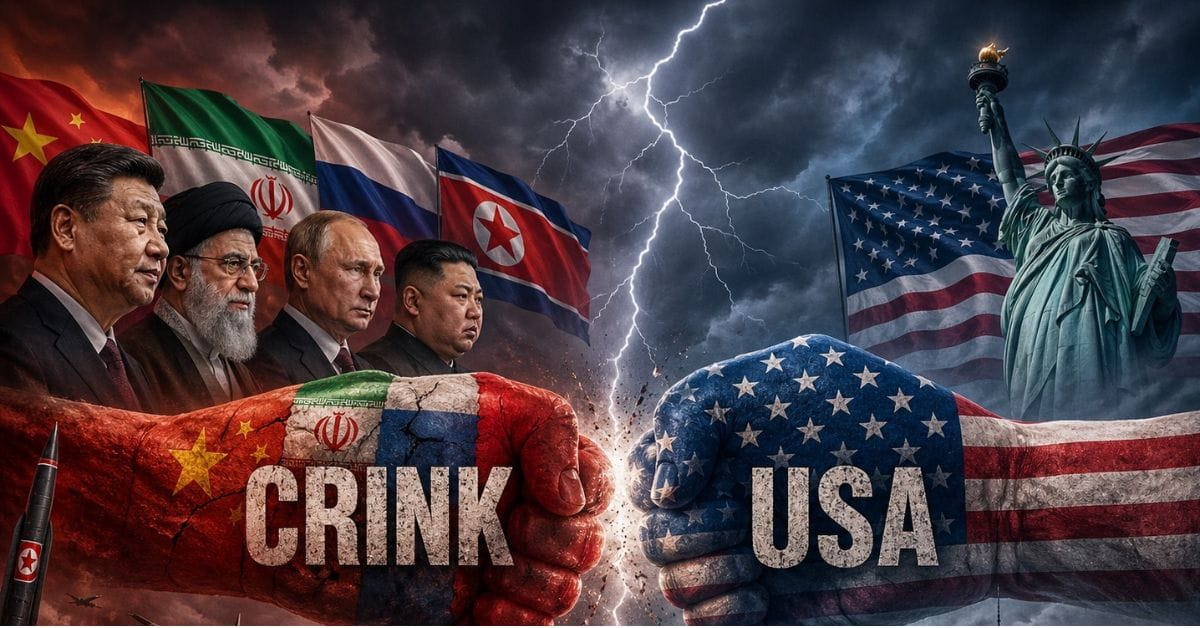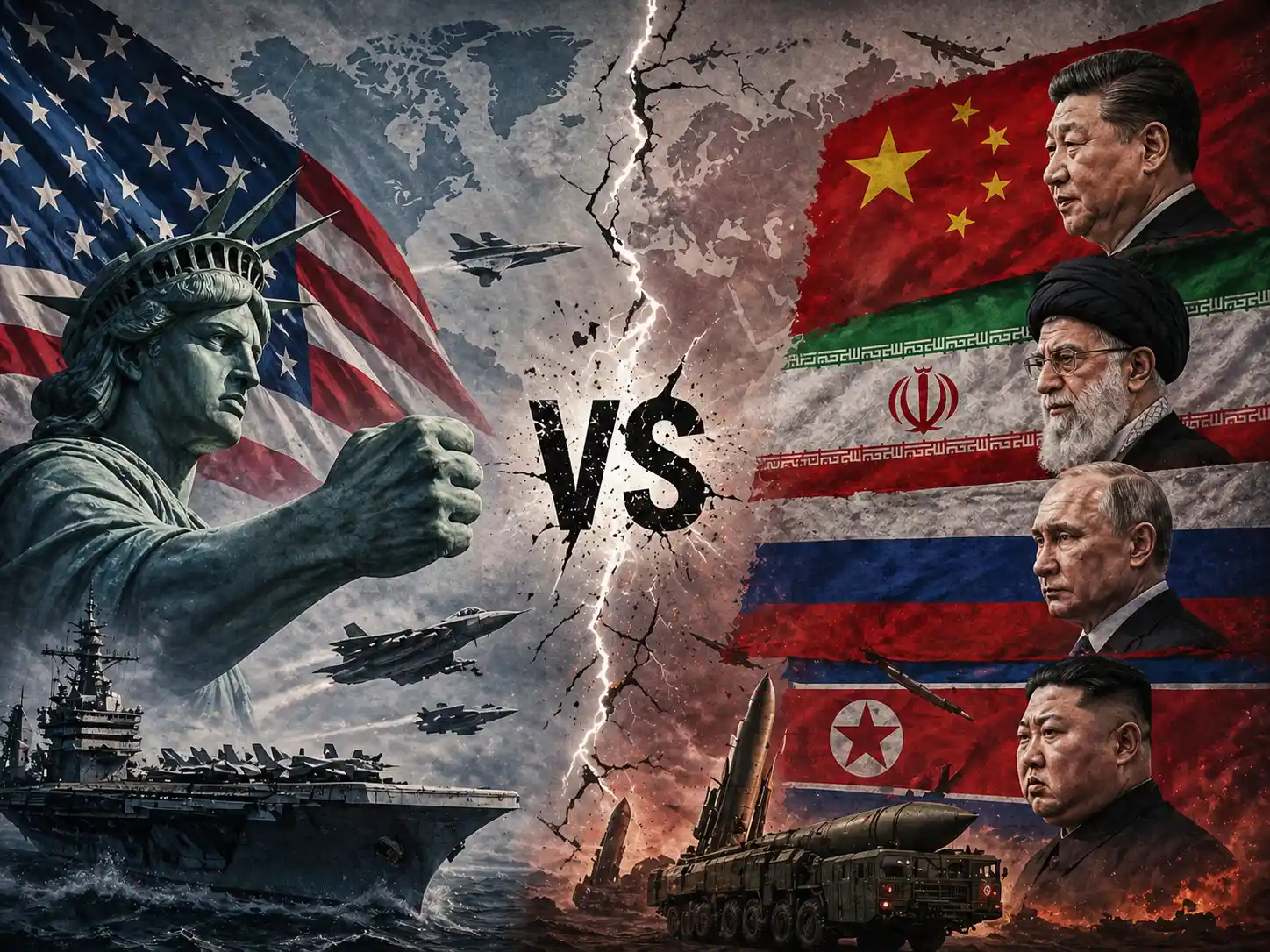
China and Russia have moved swiftly to co-opt the Venezuelan narrative within multilateral forums, particularly the UN Security Council. Both nations backed Venezuela’s request for an urgent Security Council meeting, with China’s UN ambassador having previously stated at a December session that Beijing opposed all acts of unilateralism and bullying, urging Washington to refrain from interfering in Venezuela’s internal affairs. During the January 5 emergency session, Chinese and Russian representatives demanded Maduro’s immediate release while framing the raid as a violation of the UN Charter.
This strategy seeks to weaponise the very international legal framework the United States helped establish. By positioning the Venezuelan operation as violating Article 2(4) of the UN Charter which prohibits the threat or use of force against the territorial integrity or political independence of any state CRINK actors attempt to transform U.S. military might into a liability.
for American credibility. Their argument is straightforward yet potent: a rules-based order must be applied equally to all nations, including the most powerful. When the United States bypasses the Security Council, employs force to remove a head of state, and justifies such action through unilateral determinations, it undermines the very multilateral system it claims to champion.
This normative contestation extends beyond Venezuela. China and Russia argue that if Washington can act unilaterally in its hemisphere, citing law enforcement and security concerns, other powers should possess similar latitude in their regions. Yet they simultaneously insist that such U.S. actions violate international law—a seemingly contradictory position that nonetheless effectively weakens U.S. moral authority. By consistently invoking principles of sovereignty, non-interference, and multilateralism, CRINK actors position themselves as defenders of smaller nations against great power predation, even as they pursue their own regional ambitions.
The long-term goal is to shift the locus of international legitimacy. Rather than accepting U.S. definitions of acceptable behaviour, CRINK nations work to establish alternative normative frameworks where sovereignty trumps humanitarian concerns, non-interference supersedes democracy promotion, and multipolarity replaces what they characterise as American hegemony. The Venezuelan episode provides a concrete example they can repeatedly reference in future disputes, whether concerning Ukraine, Taiwan, Iranian nuclear facilities, or North Korean weapons tests.
Amplifying Domestic and Regional Narratives
Iran and North Korea particularly weaponise the Venezuelan raid to reinforce internal legitimacy through external threat narratives. In Tehran, where the regime faces ongoing protests and discontent, highlighting U.S. aggression against Venezuela supports claims of American subversion threatening Iranian sovereignty. The Islamic Republic’s characterisation of the operation as representing a grave breach that affects the entire international system allows Iranian leaders to position domestic repression as necessary defence against foreign-backed destabilisation.
This external threat justifies political crackdowns, military buildups, and continued investment in deterrent capabilities. Iranian officials can point to Venezuela as evidence that U.S. promises mean nothing, that negotiations are traps, and that only strength potentially including nuclear weapons development can guarantee regime survival. The Venezuelan precedent thus undermines moderates who advocate diplomatic engagement with Washington, strengthening hardliners who argue for confrontation and self-reliance.
North Korea employs similar logic with even greater intensity. Pyongyang’s state media can showcase Maduro’s capture as validation of every warning about U.S. intentions, every sacrifice demanded for military modernisation, every restriction justified by external threat. The regime’s narrative that only nuclear deterrence prevents North Korea from meeting Venezuela’s fate becomes seemingly prescient rather than paranoid. This reinforces internal control while complicating international efforts to achieve denuclearisation through diplomatic incentives. Russia’s weaponisation of the Venezuelan narrative serves its Ukraine strategy. Moscow can argue that a strong state must resist Western pressure through military power, justifying both its invasion of Ukraine and its continued prosecution of that war.
Russian propaganda presents the Venezuelan intervention as proof of American intentions: Washington seeks to dismember Russian influence, remove leaders who resist U.S. hegemony, and impose subservient regimes. This framing helps sustain domestic support for the Ukraine war despite mounting costs, positioning resistance as existential necessity rather than aggressive choice.
Regionally, these narratives resonate beyond CRINK capitals. In Latin America, U.S. intervention in Venezuela evokes historical memories of American interference throughout the hemisphere, from Chile to Guatemala to Panama. Even nations critical of Maduro’s authoritarian rule have condemned the operation’s unilateral nature. In the Middle East, Africa, and Asia, countries wary of Western pressure can cite Venezuela as justification for hedging strategies, diversifying partnerships, and resisting U.S. influence. The raid thus becomes a recruiting tool for anti-American coalitions, demonstrating why countries should align with powers offering sovereignty-respecting alternatives to U.S.-led order.
Strategic Alliance Signalling
Each CRINK actor uses the Venezuelan episode to reaffirm support for sovereignty norms as counter-meaning to U.S. interventionism, thereby reinforcing alliances and partnerships with states suspicious of American power. China’s emphasis on non-interference and respect for independent development paths strengthens ties with nations across Africa, Latin America, and Southeast Asia. By consistently opposing what Beijing terms unilateral bullying and hegemonic acts, China positions itself as a reliable partner that respects sovereignty rather than demanding political concessions.
This messaging proves particularly effective in the Global South, where many nations harbour bitter memories of Western colonialism and intervention. When China argues that countries should respect the development path independently chosen by other peoples, it offers an alternative to U.S. democracy promotion that many governments find appealing. The Venezuelan case becomes proof that China, unlike America, does not seek to impose its system on others or employ military force to achieve regime change.
This soft power advantage helps Beijing expand economic partnerships, secure access to natural resources, and build diplomatic support for Chinese positions on Taiwan, Xinjiang, and other contested issues. Russia leverages similar dynamics in its near abroad and beyond. Moscow’s condemnation of the Venezuelan intervention allows it to present itself as defender of sovereignty against Western encroachment, strengthening ties with former Soviet states, Middle Eastern partners, and Latin American allies.
The narrative of Western double standards where the U.S. claims international law applies to Russia’s actions in Ukraine but not to American operations in Venezuela resonates with nations frustrated by perceived hypocrisy in international relations. Iran uses the Venezuelan precedent to deepen cooperation with resistance movements and anti-Western governments. Tehran’s portrayal of the raid as imperial aggression reinforces solidarity with groups and states opposing U.S. influence, from Hezbollah to Syria to Yemen’s Houthis. By positioning itself as leading resistance to American hegemony, Iran strengthens ideological bonds that transcend mere transactional relationships, creating a network united by opposition to Western power rather than just shared interests.
North Korea, though more isolated, uses the Venezuelan example in its limited diplomatic engagements to argue that small nations must stand together against U.S. pressure. Pyongyang’s messaging emphasises that sovereignty and self-determination require strong defence capabilities, potentially encouraging weapons sales or security cooperation with nations concerned about American intervention.
Collectively, these alliance-signalling efforts work to fragment international consensus on U.S. leadership and create alternative centres of power. CRINK actors are not building a formal alliance but rather reinforcing overlapping networks of states resistant to American influence. The Venezuelan raid serves as a focal point for this resistance, demonstrating why countries should diversify partnerships, hedge against U.S. pressure, and consider alternatives to Western-dominated international institutions. Each expression of solidarity with Venezuela, each condemnation of American actions, strengthens these alternative networks and weakens U.S. ability to build coalitions supporting its interests.
Implications for the International Order
1. Normative Contestation
The Venezuelan operation fundamentally complicates the American narrative of the United States as steward of the rules-based international order. For decades, Washington has positioned itself as the principal defender of international law, multilateralism, and institutional frameworks like the United Nations. Yet Operation Absolute Resolve—bypassing the Security Council, employing military force against a sovereign nation, and extracting its head of state for trial in New York sits uneasily with these professed commitments. CRINK propaganda gains significant traction by highlighting this apparent contradiction.
The raid becomes a pretext for multipolar discourse where sovereignty and non-interference are weaponised against U.S. actions. Chinese, Russian, Iranian, and North Korean officials consistently invoke international law not because they universally respect it each violates legal norms when convenient but because doing so exposes perceived American hypocrisy. When the United States employs force unilaterally while condemning others for similar behaviour, it undermines the legitimacy of the very order it claims to defend. CRINK actors exploit this vulnerability relentlessly, asking why international law should constrain their actions if it does not constrain America’s.
This normative contestation extends beyond immediate Venezuelan concerns to broader questions of international governance. If powerful states can simply ignore inconvenient legal constraints, claiming security imperatives or moral urgency, what remains of the rules-based order? CRINK nations argue that U.S. actions reveal that order as hollow a rhetorical device to justify Western interests rather than a genuine framework of mutual obligation. They propose alternative principles: absolute sovereignty where domestic affairs remain sacrosanct regardless of human rights concerns; strict non-interference precluding even diplomatic pressure on internal policies; and multipolarity where no single nation or bloc can claim universal jurisdiction or moral authority.
The transformation of these principles from defensive rhetoric into offensive ideology represents a significant shift. Sovereignty and non-interference historically protected weaker nations from stronger powers. CRINK actors now weaponise these norms to shield authoritarian practices from international scrutiny, justify regional aggression, and resist accountability for international crimes. By consistently framing U.S. actions as violating sovereignty while portraying their own behaviour as defensive, they work to delegitimise Western power while expanding their own influence.
The Venezuelan precedent may accelerate this normative shift. Each time Washington acts unilaterally, CRINK nations can point to Venezuela as proof that American commitment to international law is conditional and self-serving. This damages U.S. credibility not only with adversaries but also with partners who genuinely value multilateral frameworks. The more the United States prioritises its interests over institutional constraints, the more space CRINK actors gain to do likewise while claiming consistency rather than hypocrisy.
2. Diplomatic and Strategic Backlash
States resistant to U.S. power now possess a concrete episode to cite when arguing against Western intervention, affecting alliances and conflict zones globally. The Venezuelan operation’s ripple effects extend far beyond the Caribbean, influencing calculations from East Asia to the Middle East to Africa. Nations concerned about American intentions can invoke Venezuela as justification for defensive measures: expanding military capabilities, diversifying partnerships, hedging through relationships with China and Russia, and resisting U.S. diplomatic pressure on issues from human rights to trade policy.
Even traditional U.S. partners have expressed discomfort with the Venezuelan intervention’s methods and implications. European allies like France, Germany, and the United Kingdom offered carefully calibrated responses acknowledging their opposition to Maduro’s dictatorship while emphasising the importance of international law and UN Charter principles. This hedging reflects genuine concern that American willingness to employ military force unilaterally could create dangerous precedents. British Prime Minister Keir Starmer’s insistence on establishing facts before commenting signals allied caution about endorsing actions that might embolden future interventions.
Latin American reactions proved particularly divided. Right-wing governments like Argentina and the incoming Chilean administration celebrated Maduro’s removal, viewing it as liberation from dictatorship. Yet left-leaning governments including Brazil, Colombia, and Mexico issued sharp condemnations, with six nations producing a joint statement rejecting U.S. actions as potentially constituting an extremely dangerous precedent for peace and regional security. Brazilian President Lula’s characterisation of the operation as crossing an unacceptable line reflects broader regional concerns that American interventionism threatens sovereignty throughout the hemisphere.
These diplomatic fissures carry strategic consequences. Nations distancing themselves from U.S. tactics might prove less reliable partners in future crises, prioritising diplomatic solutions over support for military action. This complicates Washington’s ability to build coalitions, whether for sanctions enforcement, intelligence sharing, or joint military operations. When allies question American commitment to multilateralism, they become more willing to act independently or align with alternative power centres.
In conflict zones, the Venezuelan precedent influences adversary calculations. Iranian leaders must now consider whether U.S. threats of force carry greater credibility given demonstrated willingness to act against indicted heads of state. North Korean strategists see validation for their nuclear deterrence doctrine. Chinese planners may view the operation as evidence that U.S. willingness to employ force remains robust despite diplomatic rhetoric about competition over confrontation. Russian observers note that Washington conducted a major military operation while simultaneously negotiating on Ukraine, suggesting U.S. bandwidth for multiple simultaneous crises.
Conversely, some adversaries may see opportunity in distraction or overreach. If the United States becomes mired in Venezuelan occupation or reconstruction, it possesses fewer resources for other theatres. If allies distance themselves over intervention concerns, Washington’s position weakens in ongoing disputes. The strategic backlash thus manifests not only through diplomatic condemnation but through shifts in global alignment, with nations recalculating their partnerships based on demonstrated American behaviour rather than stated principles.
3. Long-Term Norm Diffusion
The most consequential implication may be gradual transformation of sovereignty’s meaning and whose norms become internationally dominant. As CRINK actors repeat and reinforce their interpretive frames through UN speeches, diplomatic statements, state media, and bilateral engagements smaller states may adopt similar language and concepts. This norm diffusion operates incrementally, shaping how governments and populations understand legitimate international behaviour.
When China consistently argues that sovereignty requires respecting each nation’s chosen development path without external interference, it establishes a counter-narrative to Western human rights discourse. When Russia frames its Ukraine invasion as protecting Russian-speakers from Western-backed threats while condemning U.S. actions in Venezuela, it promotes sphere-of-influence thinking where great powers possess special prerogatives in their regions. When Iran portrays resistance to American pressure as principled defence against imperialism, it provides ideological cover for authoritarian practices. When North Korea presents military deterrence as the only reliable defence against regime change, it legitimises weapons proliferation.
These alternative normative frameworks gain traction through repetition and perceived validation. Each time a U.S. operation like Venezuela appears to confirm CRINK narratives about American hypocrisy or interventionism, those narratives become more credible to fence-sitting nations. Leaders in Africa, Asia, and Latin America—particularly those facing Western pressure on governance, human rights, or rule of law—find Chinese or Russian arguments increasingly appealing. Why prioritise democracy and transparency if doing so invites external interference? Why engage with Western-dominated institutions if they serve primarily as vehicles for American power?
This gradual shift threatens the liberal international order’s foundational premises. That order assumes states share basic commitments to human rights, democratic governance, peaceful dispute resolution, and institutional constraint on arbitrary power. CRINK actors work to replace these assumptions with alternatives emphasising sovereignty, absolutism, civilisational diversity, and great power spheres of influence. The Venezuelan operation, by seeming to validate criticisms of American exceptionalism and double standards, accelerates this normative competition.
Long-term, the diffusion of CRINK interpretive frameworks could fundamentally alter international politics. If sovereignty comes to mean freedom from any external accountability, authoritarian regimes gain protection while human rights enforcement becomes illegitimate. If multipolarity means great powers divide the world into spheres where each can act unilaterally, smaller nations lose agency and protection. If international law becomes purely instrumental invoked when convenient ignored and when not, the entire project of global governance falters.
The struggle over Venezuela’s meaning thus extends far beyond one nation or one operation. It represents competing visions of international order: one emphasising universal values, institutional constraints, and democratic accountability; another prioritising sovereignty, non-interference, and power balancing. CRINK actors leverage the Venezuelan raid to advance their vision, using American actions as evidence that Western commitment to the rules-based order is conditional at best. Whether their counter-hegemonic narrative ultimately prevails depends on choices by both great powers and smaller nations navigating between competing normative frameworks. The Venezuelan precedent will shape those choices for years to come, influencing how states understand sovereignty, legitimacy, and the boundaries of acceptable international behaviour.
All the views and opinions expressed are those of the author. Image Credit: THE VIYUG.
About the Author
Mansi Suryavanshi is a research consultant for The Viyug. She has developed expertise in paralegal services and research work related to judgements for assisting legal work. She previously worked as an assistant professor at the Department of Physics in PG College.