As the fragile ceasefire between the United States and Iran enters its third week in April 2026, with Iranian forces seizing ships in the Strait of Hormuz and the U.S. maintaining its naval blockade, the conflict—now in its eighth week—continues to ripple far beyond the Persian Gulf. Launched on February 28 with coordinated U.S.-Israeli airstrikes targeting Iranian military sites, nuclear facilities, and senior leadership, the war has already reshaped regional dynamics and exposed deep fissures in the transatlantic security architecture.
For NATO, the world’s most enduring military alliance, the crisis poses not a direct invocation of its core mutual-defence pact but a profound indirect challenge: one that questions the organisation’s relevance, strains its political cohesion, and accelerates debates about its post-American future.
NATO’s founding treaty, the 1949 Washington Treaty, defines the alliance’s geographic scope narrowly: collective defence under Article 5 applies only to armed attacks in Europe or North America. The U.S.-Iran war, an out-of-area operation initiated without prior NATO consultation, falls outside that perimeter.
Iranian ballistic missiles have struck or been intercepted over Turkish airspace on multiple occasions since early March, prompting NATO air-defence systems to engage successfully. Yet Secretary General Mark Rutte has been unequivocal: “Nobody’s talking about Article 5.” The alliance has expressed solidarity with Turkey, praised its integrated defences, and maintained vigilance, but it has stopped short of collective retaliation.
This restraint has not shielded NATO from the war’s fallout. President Donald Trump has repeatedly pressed allies to contribute naval forces to reopen the Strait of Hormuz, a chokepoint carrying roughly one-fifth of global oil and to support U.S. logistics from European bases. Most NATO members have declined direct involvement, citing domestic opposition to “someone else’s war” and the risk of escalation. Some, such as the United Kingdom and France, have quietly permitted use of bases for defensive operations; Spain refused outright. The result is a patchwork of logistical support without unified command, underscoring the alliance’s limits when U.S. priorities diverge from European ones.
Several pressing questions now confront NATO planners and European capitals. First, how durable is the alliance when the United States pursues unilateral Middle East operations that export economic pain skyrocketing energy prices, disrupted shipping, and potential refugee flows to its partners? European economies, already strained by the Russia-Ukraine war, face compounded risks from Hormuz disruptions that could add tens of billions to energy bills and bolster Russian revenues.
Second, will resource diversion undermine NATO’s core mission on its eastern flank? U.S. stockpiles of air-defense interceptors have been depleted by operations against Iran, leading to reports that European-sourced munitions intended for Ukraine are being redirected. This has fuelled concerns that Moscow could exploit Washington’s divided attention.
Third, and most existential: Does the war accelerate Europe’s long-discussed push for strategic autonomy, or does it reinforce the need for a reformed NATO? Analysts note that the conflict has not triggered the alliance’s dissolution but has eroded trust. The United States launched strikes without allied input, and Trump’s public rebukes of “free-riding” partners have deepened resentment. European governments, long urged to increase defence spending, now confront the reality of a distracted American patron. Frontline states in Eastern Europe are quietly accelerating readiness plans that assume reduced U.S. presence, while others invest in indigenous production of missiles, drones, and command systems.
The future of NATO in this environment appears neither doomed nor unchanged. Carnegie Endowment scholars argue the alliance “can survive the Iran war and even a U.S. withdrawal as European members have an incentive to maintain it, even if in a radically different form.” A stronger “European pillar” within NATO emphasising integrated command structures, burden-sharing, and European-led planning could emerge as the pragmatic path forward. Yet survival is not guaranteed. If European governments remain divided and reactive, the alliance risks becoming a hollow forum for dialogue rather than a credible deterrent. Long-term viability hinges on genuine mutual trust, a shared strategic vision, and collective willingness to act qualities tested daily by events in the Gulf.
The U.S.-Iran conflict has thus served as an unintended stress test. It has confirmed NATO’s resilience in defensive scenarios, such as ballistic-missile intercepts over Turkey, while exposing its vulnerability to American strategic pivots away from Europe. As ceasefire talks mediated by Pakistan remain uncertain and Hormuz tensions persist, the alliance stands at a crossroads. European leaders must now decide whether to double down on transatlantic interdependence or accelerate the construction of a more self-reliant defense architecture. For NATO, the war in the Middle East may ultimately prove less about direct combat than about whether the alliance can adapt to a world in which American priorities no longer align seamlessly with European security needs.
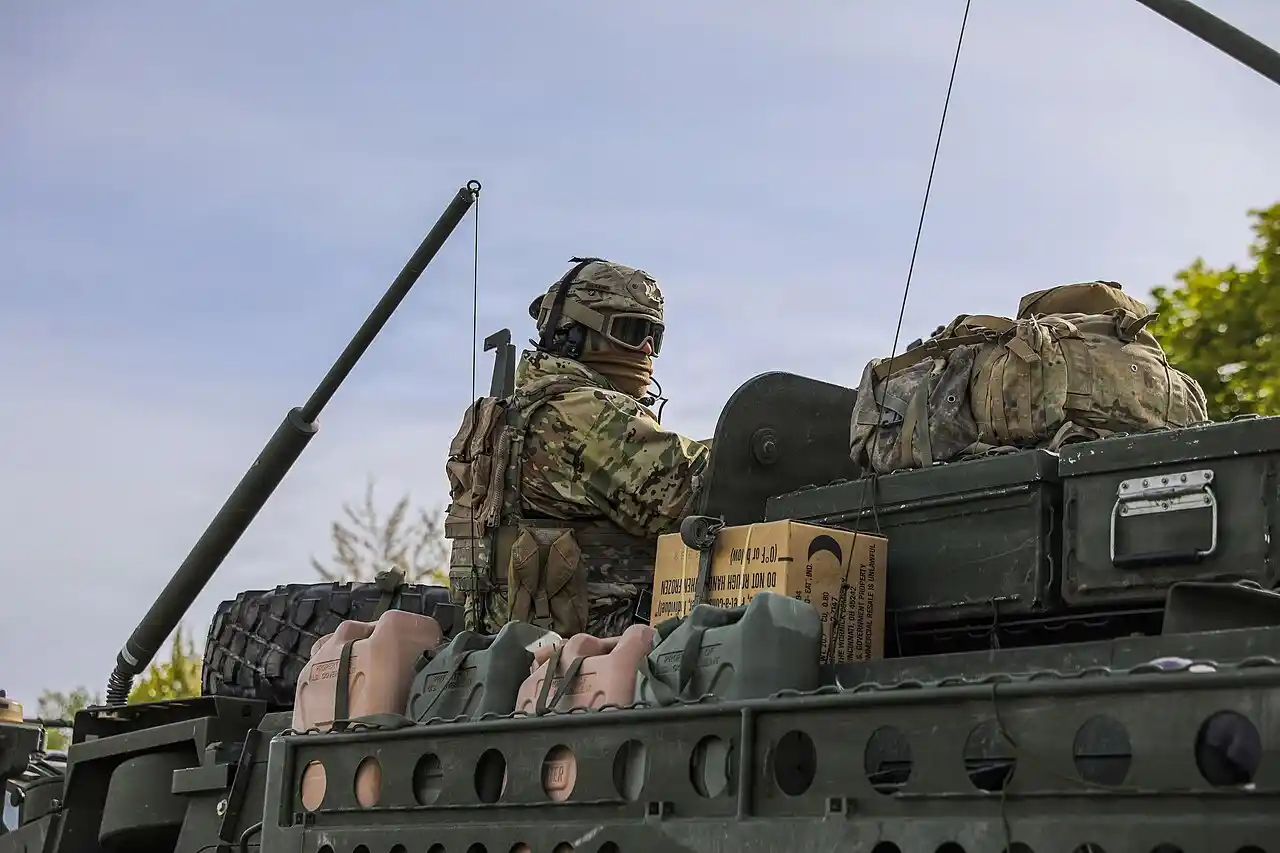
All the views and opinions expressed are those of the author. Image Credit: U.S. Army Reserve photo by Staff Sgt. Vontrae Hampton.
About the Author
Jaiee Ashtekar holds a bachelor’s degree and a master’s degree in political science from the University of Mumbai. She holds a post-graduate diploma in international relations from the University of Strathclyde, United Kingdom (UK). She has done projects titled “Kashmir through Political Perception” and “Water issues between India and Pakistan”.