In the age of great power competition, wars are increasingly waged by proxy. Instead of meeting on the battlefield, major powers are armed, financed, informed, and militarily assisted partners fighting each other in other regions. From Europe to the Middle East, today’s wars more and more look like external powers are fighting on different sides, supporting, but not formally joining, the fight. This growing dependence on proxy warfare marks a transformation of international conflict at its core.
Direct military conflict between great powers is politically and strategically risky, particularly in a nuclearised world. In consequence, states are turning more to indirect means of intervention that allow them to affect outcomes without incurring the costs and escalation risks of direct war. Within a globalised international system, defined by interlinked arms markets, defence partnerships and the rapid diffusion of technologies, proxy warfare has consequently become a primary tool of geopolitical rivalry.
And yet globalisation has also made that indirect participation that much easier to maintain. The development of global arms markets, defence cooperation agreements and transnational supply chains has allowed states to project military influence beyond their borders without physically deploying large numbers of troops.
External powers can now shape the course of conflicts, and do so at a certain strategic distance, because weapons, military technology, and money can be funnelled quickly across regions. Consequently, many of today’s conflicts are no longer purely local contests; they are increasingly situated within wider geopolitical rivalries in which external actors make use of proxy forces to pursue their strategic interests.
Understanding Proxy Warfare
Proxy warfare is a war waged by external powers through local actors, such as states, militias, and armed groups, to achieve geostrategic objectives without becoming directly engaged in fighting. Rather than sending in bulked-up forces, these foreign entities provide material, including weapons, military training, intelligence, money and logistical assistance. By means of such proxy even involvement, states can influence the outcomes of conflicts at less risk and cost to themselves in terms of battlefield and political casualties.
One of the things that is true of the Cold War is that proxy wars fit very neatly into the ideological competitions of the time when the superpowers were supporting rival sides in wars across Asia, Africa, and Latin America. But that didn’t eliminate proxy war. In fact, in an international system today characterised by nuclear deterrence, intensified geopolitical competition, and a globalised world in which states operate within increasingly complex transnational networks, the use of indirect channels of conflict has come to represent a desirable strategic choice for states seeking to expand their capabilities without confronting one another in direct clashes.
Why States Prefer Proxy Warfare?
Among the main incentives for states to use proxy war is the desire to avoid direct military confrontation with competing powers. With multiple great powers in the international system armed with nuclear weapons, direct conflict is prone to rapid escalation and resultant disaster. States can advance strategic goals and avoid crossing the line into direct interstate war by backing indigenous forces rather than sending troops. In that sense, proxy war offers a way for geopolitical rivalry to play out without leading to full-scale military confrontation.
There is also the reduced political and economic cost of direct intervention. There are also the political and economic costs of acting directly. Military interventions, even major ones, can be costly in terms of both finances and popular support especially if they necessitate long-term deployments or produce high casualties. States determine the trajectory of battles and wars and do so routinely not only by going toe-to-toe with opposing forces but also by providing weapons, training, or money to allied forces in the field. In this sense, states can pursue strategic leads international without paying the full costs of warfare.
Proxy fighting also allows states to increase their geopolitical clout in strategic areas of the world. In the process of supporting specific parties in active conflicts, external actors are able to influence political outcomes, solidify alliances, and gain access to critical strategic areas. Support to proxy forces thus becomes a vehicle for projecting power beyond the national borders, enabling states to compete for influence without the need of formally participating in the war. In that respect, proxy warfare is a rising tool of contemporary geopolitical game.
Globalisation and the Expansion of Proxy Wars
Although proxy warfare is not a new development, globalisation has multiplied its scale and pace. The development of international arms markets, defence partners, and transnational financial networks has facilitated states to back allies and partners engaged in conflicts overseas. Military hardware, financing and logistical support can now be transported rapidly across borders, enabling external actors to exert influence in conflicts without the need to dispatch large military forces of their own.
Developments in military technology and the proliferation of weapons systems have also redefined the character of proxy warfare. Drones, precision-guided munitions, and surveillance technologies are now more easily attainable by both state and non-state actors. Outside powers can offer such capabilities to their partners, increasing their effectiveness on the battlefield while staying at arm’s length from the fighting itself.
Therefore, many modern wars are not simply national or regional conflicts. Rather, they more frequently become arenas in which wider geopolitical rivalries play out vicariously. Using arms, intelligence and financial support, outside powers direct the course of local wars to serve their own strategic interests. Globalisation has provided the infrastructure for sustaining and magnifying modern proxy warfare.
Implications for Global Security
The growing dependence on proxy warfare stands to shape the international system. As one major consequence, wars tend to last longer and be more complex since states on the outside continue to provide weapons, money, and logistic support to their favoured actors. Such outside support can decrease incentives to compromise and extend fighting on the ground.
Proxy wars have also blurred the distinction between internal wars and wider competition in global politics. Local wars, that is, the wars that arise initially from domestic political or regional tensions, are liable to be drawn into the strategic competitions of great powers. The potential for miscalculation and escalation is heightened as more parties become involved.
Also, the proliferation of arms and military technology may lead to increased instability in the region and to the empowerment of armed groups, hindering reconstruction after conflict. In that regard, proxy warfare not only alters how modern conflict is conducted but also complicates the achievement of enduring peace.
Ending Note
Proxy warfare, fighting through surrogate forces on the ground, has come to define much of the global geopolitical competition today. With the world shaped by nuclear deterrence, great power competition, and deep economic interdependence, states are growing increasingly hesitant to seek out direct military confrontations. Rather, they want to try to shape these wars from without, by supporting partners and allies that are fighting wars in other parts of the world.
Globalisation has also facilitated this trend by enabling a quick circulation of arms, finances and military knowhow across borders. Consequently, many of today’s wars are not all about local issues but are in some way linked to wider geopolitical contests. The emerging nature of conflicts in the 21st century can therefore be analysed by understanding the incendiary nature of proxy war.
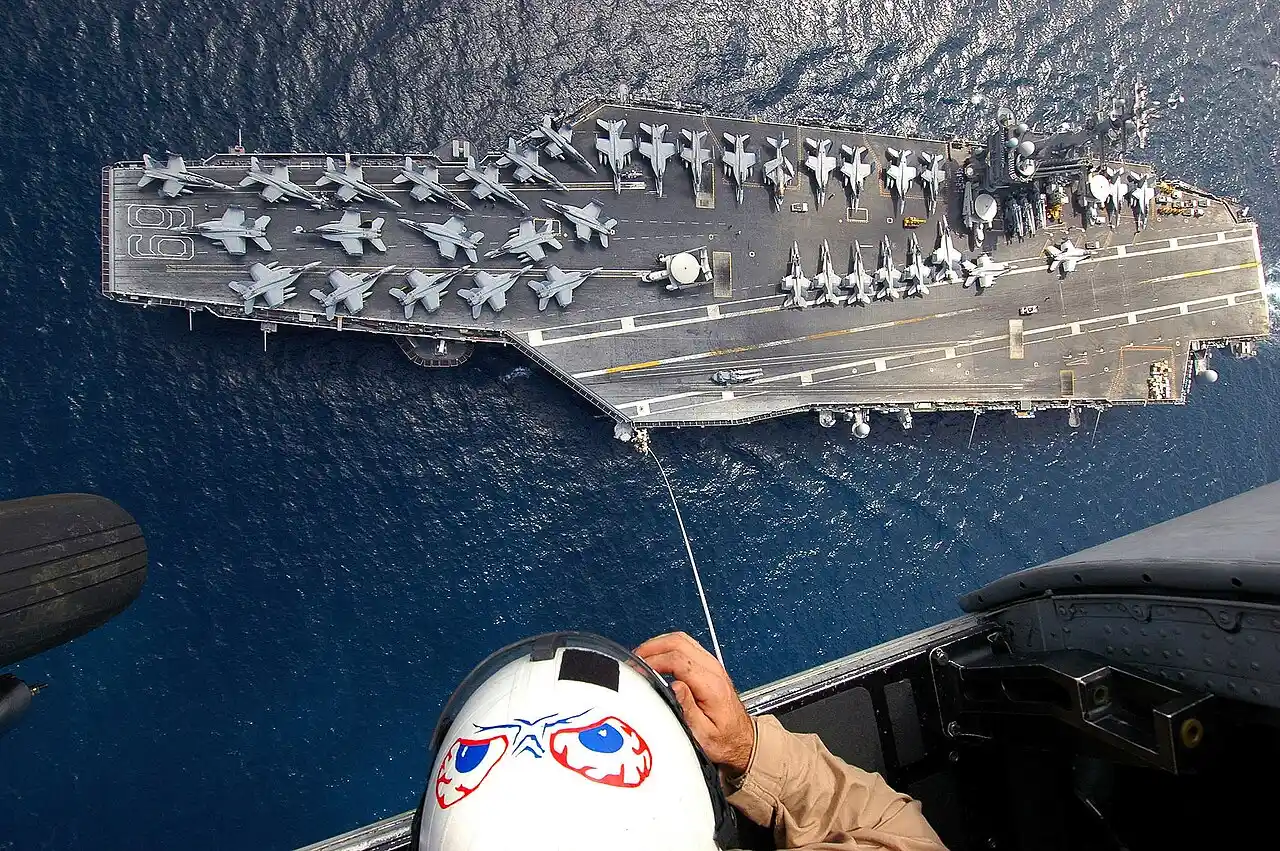
All the views and opinions expressed are those of the author. Image Credit: United States Navy.
References
1. Mumford, Andrew (2013). Proxy Warfare. Polity Press.
2. Fox, Amos C. (2019). “Conflict and the Need for a Theory of Proxy Warfare.” Journal of Strategic Security.
3. Rauta, Vladimir (2018). “Proxy Warfare and the Future of Conflict.”
4. Farrell, Henry & Newman, Abraham (2019). “Weaponized Interdependence.” International Security.
About the Author

Archita Gaur is a postgraduate student at the School of International Studies, Jawaharlal Nehru University (JNU). She specialises in the world economy and has a strong interest in public policy, economic research, and governance.