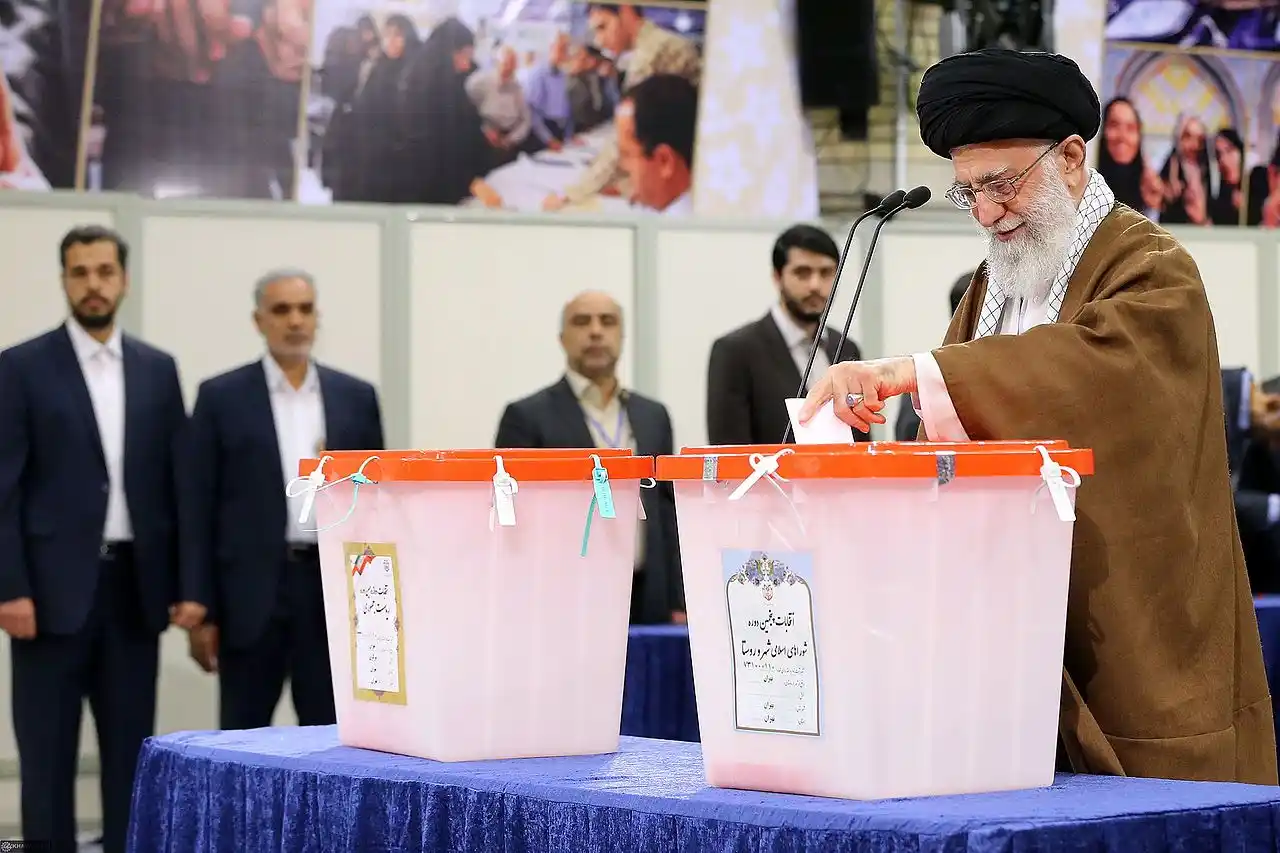
The death of Supreme Leader Ayatollah Ali Khamenei would represent one of the most consequential political turning points in the history of the Islamic Republic of Iran. Since succeeding Ayatollah Ruhollah Khomeini in 1989, Khamenei has served as the central authority within Iran’s political system. The Supreme Leader holds ultimate control over the military, the judiciary, intelligence services, and nuclear policy, making the position the most powerful office in the country. With Khamenei gone, Iran would face an uncertain leadership transition that could reshape both its domestic political order and its regional strategy.
The Islamic Republic was founded in 1979 following the Iranian Revolution led by Ayatollah Ruhollah Khomeini. Since then, Iran’s political structure has combined republican institutions such as an elected president and parliament with a system of clerical oversight dominated by the Supreme Leader. Although elections occur regularly, the Supreme Leader maintains final authority over key strategic decisions. For three decades, Khamenei has acted as the central figure balancing Iran’s competing political factions, including conservative clerics, reformist politicians, and the powerful Islamic Revolutionary Guard Corps (IRGC). His death would therefore create a major leadership vacuum.
According to Iran’s constitution, the responsibility for appointing a new Supreme Leader lies with the Assembly of Experts, an eighty-eight-member body composed of senior clerics. In theory, this institution evaluates potential candidates and selects a religious authority capable of guiding the Islamic Republic. In practice, however, the decision is deeply political and influenced by elite power networks within the clerical establishment and the security apparatus. The selection process could become especially complicated if competing factions attempt to shape the outcome.
The Supreme Leader Succession Process
From the death of Ayatollah Khamenei to the selection of a new Supreme Leader — the constitutional path, factional pressures, and three possible political outcomes.
One of the most frequently discussed potential successors is Mojtaba Khamenei, the Supreme Leader’s second son. Although he does not currently hold a formal senior clerical rank comparable to leading marjaʿ authorities, Mojtaba has reportedly developed strong relationships within Iran’s security institutions, particularly the IRGC and the Basij militia. Support from these organisations could provide him with the political leverage necessary to emerge as a leading candidate during a leadership transition. If the Assembly of Experts were persuaded to select him, Iran could experience a form of dynastic continuity within the revolutionary system, preserving many elements of the current political order.
However, Mojtaba Khamenei’s potential succession would likely face resistance from other factions. Some clerics may oppose the perception of hereditary leadership within a system that officially rejects monarchy. Furthermore, rival political groups including reformists and pragmatic conservatives may attempt to promote alternative candidates with stronger religious credentials. Senior clerics associated with the religious seminaries in Qom, such as Ayatollah Alireza Arafi or other prominent figures within the clerical hierarchy, could therefore emerge as compromise candidates capable of maintaining the legitimacy of the religious establishment.
Another possibility is the rise of a collective leadership model or increased influence by the IRGC. Over the past three decades, the Revolutionary Guard has transformed into one of the most powerful institutions in Iran, controlling significant economic resources, intelligence capabilities, and military assets. In a period of political uncertainty, IRGC commanders could play a decisive role in shaping the succession process. While the formal position of Supreme Leader might still be filled by a cleric, real authority could increasingly shift toward military leadership behind the scenes. In a more extreme scenario, the IRGC could support the establishment of a military-dominated governing structure designed to preserve regime stability during the transition.
Domestic political pressures would also influence the future direction of Iran. The Islamic Republic has faced periodic waves of public protest, most notably during the demonstrations that followed the death of Mahsa Amini in 2022. These protests revealed widespread dissatisfaction among segments of the population regarding political freedoms, economic conditions, and social restrictions. If Khamenei’s death coincides with renewed social unrest, reform-oriented politicians may attempt to push for limited political liberalisation. Figures associated with reformist movements could advocate policies aimed at reducing international isolation and improving relations with Western states in order to address Iran’s economic challenges.
The international environment would further complicate Iran’s leadership transition. Iran’s regional strategy relies heavily on partnerships with allied non-state actors, including Hezbollah in Lebanon, Hamas in Gaza, Shia militias in Iraq and Syria, and the Houthis in Yemen. These groups are often collectively described as Iran’s “Axis of Resistance.” Any instability within Iran’s leadership structure could affect the coordination and funding of these partners, potentially weakening Iran’s regional influence. At the same time, rival states such as Israel and Saudi Arabia would closely monitor the transition and may attempt to exploit any temporary strategic vulnerability.
Future of Iran’s nuclear program would likely become one of the most critical issues during this period of uncertainty. Iran has already developed significant uranium enrichment capabilities, with stockpiles enriched to levels approaching weapons-grade material. A new leadership group dominated by hardline security institutions could accelerate the nuclear program as a deterrent against external threats. Conversely, a leadership coalition seeking economic relief might pursue renewed negotiations with international powers in order to ease sanctions and stabilise Iran’s economy.
Several possible political outcomes could therefore emerge following Khamenei’s death. One scenario involves continuity through succession, potentially with Mojtaba Khamenei or another conservative cleric assuming the role of Supreme Leader and maintaining the core ideological framework of the Islamic Republic. A second scenario involves increased military influence, in which the IRGC becomes the dominant force guiding national strategy even if a clerical leader remains formally in place. A third possibility is gradual political reform, driven by internal pressures and economic necessity, leading to limited changes in governance and foreign policy orientation.
Each of these outcomes would have significant implications for the Middle East. Iran’s strategic posture affects regional conflicts, energy markets, and global nuclear proliferation concerns. A stable succession could preserve the current balance of power, while a contested transition might trigger broader regional instability. Neighbouring states would likely prepare for a range of scenarios, including shifts in Iran’s foreign policy priorities or temporary disruptions to its regional alliances.
Ultimately, the post-Khamenei era would test the resilience of the political system established after the 1979 revolution. The Islamic Republic has long depended on the authority of a dominant Supreme Leader to mediate factional competition and maintain ideological unity. Without Khamenei, Iran’s leadership structure could face internal fragmentation, forcing political elites to renegotiate the balance of power within the state. The trajectory of this transition whether toward consolidation, reform, or instability would shape the geopolitical landscape of the Middle East for years to come.
References
1. Reuters. Iran Crisis Live: Explosions in Tehran and Israeli strike reports.
2. The Guardian. Khamenei likely killed in U.S.–Israel strikes on Iran.
3. The Washington Post. U.S.–Iran–Israel conflict updates and leadership crisis.
4. Council on Foreign Relations. Iran’s Revolutionary Guard: Backgrounder.
5. International Atomic Energy Agency (IAEA). Statement on the Situation in Iran and Nuclear Monitoring.
6. Institute for Science and International Security. Analysis of IAEA Iran Verification and Monitoring Report.
7. Institute for Science and International Security. Analysis of IAEA Iran Verification and Monitoring Report.
8. Institute for the Study of War. Iran Update and Strategic Assessment Reports.
9. PIR Center. U.S. Strikes on Iran: Timeline and OSINT Damage Assessment.
All the views and opinions expressed are those of the author. Image Credit: Unknown author.
About the Author
Jaiee Ashtekar holds a bachelor’s degree and a master’s degree in political science from the University of Mumbai. She holds a post-graduate diploma in international relations from the University of Strathclyde, United Kingdom (UK). She has done projects titled “Kashmir through Political Perception and “Water issues between India and Pakistan”.
12 thoughts on “After Khamenei: Iran’s Uncertain Path to a New Supreme Leader”