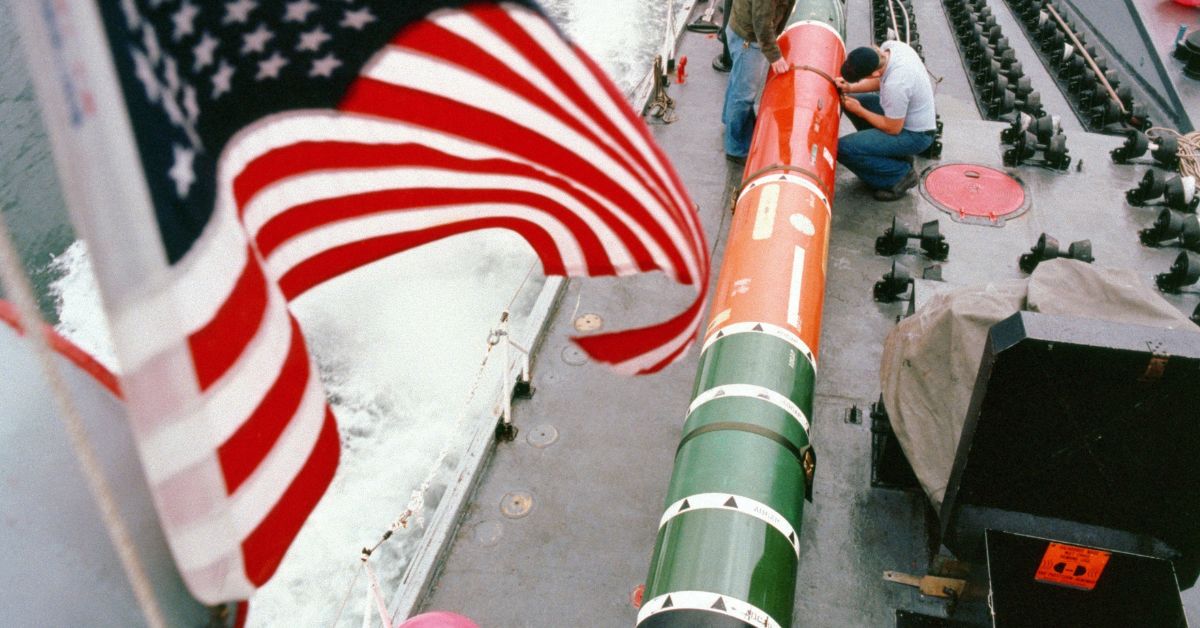
At 5:08 in the morning of March 4, 2026, a distress call crackled out from a position roughly 40 nautical miles south of Galle, Sri Lanka. By the time Sri Lankan naval vessels reached the coordinates, IRIS Dena, an Iranian Moudge-class frigate, commissioned in 2021, carrying approximately 180 sailors had already vanished beneath the Indian Ocean. What remained were spreading oil slicks, floating debris, and men treading water far from shore. The US government later confirmed, with apparent pride, that one of its nuclear-powered attack submarines had fired a single Mark 48 torpedo at the vessel. US Defense Secretary Pete Hegseth called it a “quiet death.“
The ship had spent the previous ten days as a guest of the Indian Navy at MILAN 2026, one of the world’s most significant multilateral naval exercises, attended by 74 nations. It was unarmed, as exercise protocol required. It was heading home. And it was struck without warning, 2,000 miles from the active theatre of the US–Iran conflict.
2026
2026
2026
05:08 AM
2026
2026
The question now reverberating through international law faculties, naval academies, and foreign ministries is stark: Was this a legitimate act of war or an execution at sea?
The Legal Architecture
To answer that question, one must first understand the legal framework governing naval warfare. The principal instruments are the San Remo Manual on International Law Applicable to Armed Conflicts at Sea (1994), Common Article 2 of the Geneva Conventions, which defines international armed conflict, Article 18 of the Second Geneva Convention, concerning the duty to rescue shipwrecked personnel, the UN Charter’s Article 51 on self-defense, and customary principles of International Humanitarian Law (IHL) namely military necessity, distinction, and proportionality.
A critical starting point: there was no formal US declaration of war against Iran, and Speaker of the House Mike Johnson stated publicly that “we are not at war right now.” Yet under Common Article 2 of the Geneva Conventions, a formal declaration is not required and the existence of armed hostilities between the forces of two states is sufficient to trigger the laws of war. The US government’s own admission that its submarine intentionally sank an Iranian naval vessel constitutes precisely such a threshold. The law of armed conflict therefore applies in full.
The Case for Legality
The United States’ strongest legal argument rests on a foundational principle of the law of naval warfare: commissioned warships of a belligerent state are legitimate military targets at all times and in all locations on the high seas during an armed conflict. IRIS Dena was not a civilian vessel. It was a fully commissioned Iranian Navy frigate, equipped by design with surface-to-air missiles, anti-ship missiles, torpedoes, and artillery. Under the San Remo Manual, such a vessel retains its belligerent character regardless of its current posture, cargo, or location.
The second pillar of the US case is geography. International waters, by definition, are not a sanctuary during wartime. The ocean has no front lines. Under established naval law doctrine, the Indian Ocean is no more protected from naval combat than the Persian Gulf. The attack occurred in international waters where no coastal state’s sovereignty was compromised. In other words, Sri Lanka’s territorial waters extend only 12 nautical miles, and the strike occurred more than three times that distance offshore.
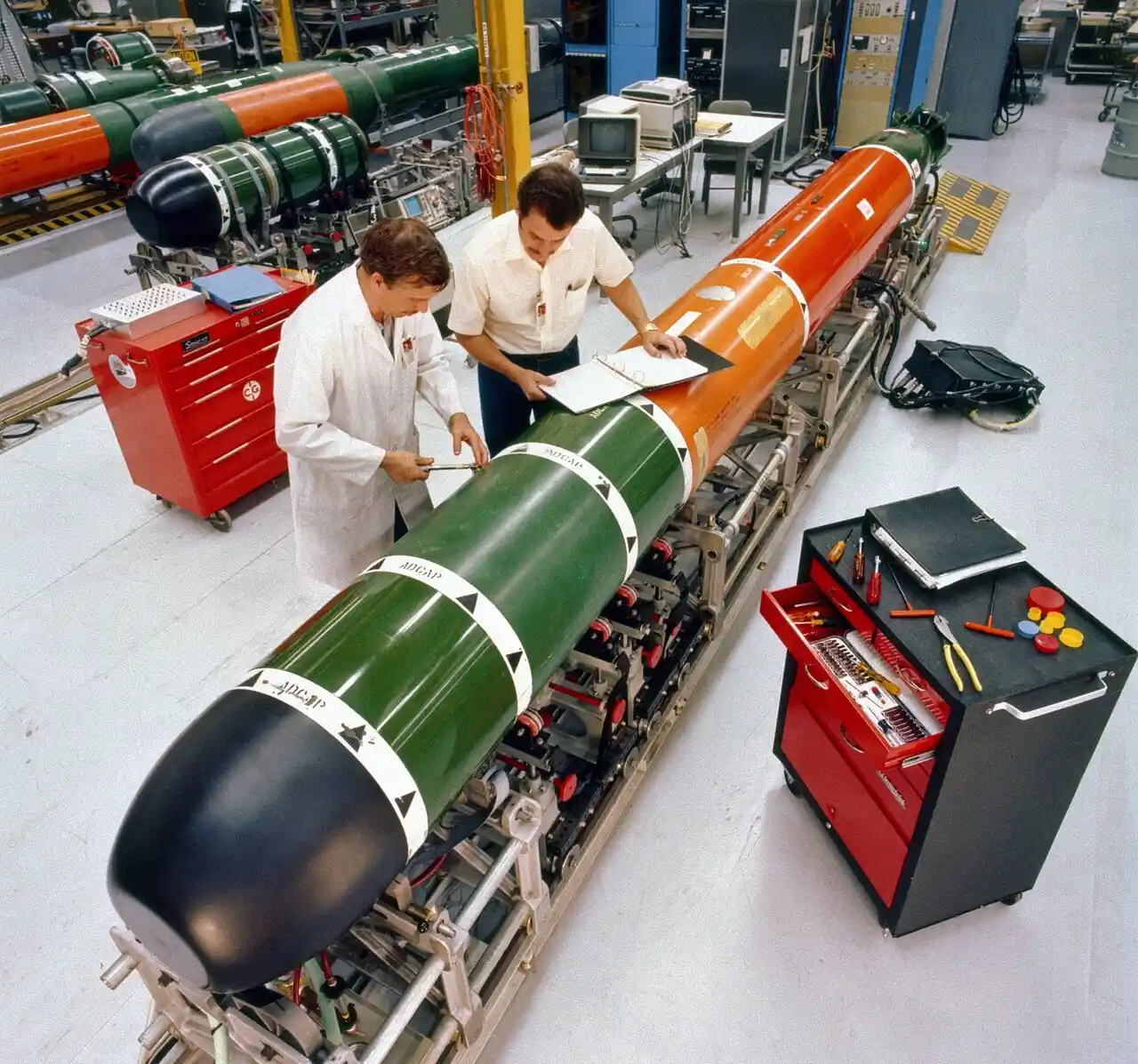
Finally, the weapon itself, the MK-48 heavyweight torpedo, is a lawful instrument of war used by a lawful combatant operating under a recognisable chain of command. The method of attack, taken in isolation, does not constitute a war crime.
The Case Against: Where the Law Breaks Down
Yet the technical legality of targeting a warship in international waters collides violently with the specific circumstances of this strike and those circumstances are what elevate the incident from contested military action to a potential war crime.
The most corrosive fact is the “peace protocol” question. MILAN 2026 required all participating vessels to operate in a non-combat configuration such as weapons stowed and systems deactivated. Iran’s Ambassador to India confirmed the Dena was “unarmed and in a regular manoeuvre at sea.” The Iranian representative of the Supreme Leader stated: “The targeting of the Iranian ship is against international law, as they did not possess any type of weapons.” If accurate, this transforms the encounter from a warship engagement into the deliberate destruction of a functionally disarmed vessel: a distinction that strikes at the heart of the IHL principle of military necessity. A ship that cannot shoot cannot, in that moment, pose an imminent threat.
“Was that warship actively posing a threat or participating in hostilities? You cannot say that this warship was an imminent threat to anyone. By targeting it, is the Trump administration saying the imminent threat is all of Iran’s government and military? If so, that’s an incredibly dangerous example of military overreach.”
“If the Dena carried little or no munitions — as the peace protocol of India’s MILAN-2026 exercise requires — the strike looks less like combat than a premeditated execution. By sinking a vessel returning from an Indian-hosted multilateral exercise, Washington effectively turned India’s maritime neighbourhood into a war zone.”
“The sinking of the Iranian warship was a senseless and inflammatory act. It was bound to spread alarm across the high seas and disrupt global seaborne commerce. No navy that respects the law of the sea could regard this as anything other than a dangerous precedent.”
“An atrocity at sea, 2,000 miles away from Iran’s shores — committed against a guest of India’s Navy. The United States will come to bitterly regret the precedent it has set.”
The second critical failure is the absence of any warning. Under long-standing naval custom codified in the San Remo Manual, where circumstances permit, an attacking force should offer a warship the opportunity to surrender before destroying it. A surprise torpedo strike from a submerged submarine at pre-dawn hours offers the target precisely zero opportunity to respond, evacuate, or capitulate. With 87 sailors confirmed dead and approximately 61 still missing, this is not a technicality but it is a question of preventable loss of life.
Third, Article 18 of the Second Geneva Convention imposes an obligation on belligerents to search for and collect shipwrecked personnel “after each engagement.” The US submarine departed the scene without rendering any assistance, leaving rescue entirely to the Sri Lankan Navy. Legal scholars writing for publications including The Telegraph have observed that while this obligation is “conditioned by operational feasibility,” the attack occurred in uncontested waters, far from any hostile forces thereby significantly weakening any feasibility defence the US might attempt to mount.
Finally, there is the question of geographic and temporal context. The active theatre of hostilities was the Persian Gulf and Iranian territory which is thousands of miles away. IRIS Dena was not intercepting a US carrier group, was not transiting a contested chokepoint, and was not signalling any hostile intent. It was sailing home from a diplomatic exercise attended by dozens of US partners, including India. Strategic Commentator Brahma Chellaney put it bluntly: “By sinking a vessel returning from an Indian-hosted multilateral exercise, Washington effectively turned India’s maritime neighbourhood into a war zone.”
The strike also raises a troubling diplomatic sub-question: analysts have asked whether sensitive maritime tracking data shared by India with the US under the military intelligence pacts COMCASA and LEMOA may have been used to locate IRIS Dena, potentially implicating India’s neutrality without its knowledge or consent.
Argentine Navy Cruiser
Iranian Navy Frigate
The sinking of the ARA General Belgrano in 1982 has been debated in courts, parliaments, and law schools for over four decades — and no verdict has ever been formally rendered. History now presents a second case, with striking parallels: a nuclear submarine, a warship sailing away from danger, no warning, no rescue, and a government insisting it was legal. If the first case remains unresolved after forty years, the second may take just as long — or longer.
The Verdict: Legally Ambiguous, Morally Damning
Defensible on Paper. Indefensible in Practice. Strictly under the black letter of the law of naval warfare, the United States can construct a technical defence: IRIS Dena was an enemy warship in international waters during an active armed conflict. That is the beginning and end of the US government’s strongest argument, and it is not nothing.
But the totality of circumstances such as a functionally unarmed ship, returning from a peaceful multilateral exercise hosted by a US partner nation, struck without warning, in uncontested waters 2,000 miles from the active conflict zone, with survivors abandoned by the attacking vessel creates a profile that will not survive serious moral, political, or legal scrutiny. When a former US Air Force targeting expert, a former Indian Navy chief, and Iran’s foreign minister all use the same language like execution, atrocity, illegal, the weight of that consensus is not dismissible.
The sinking of IRIS Dena is not merely an episode in the 2026 Iran war. It is a stress test of the entire post-war architecture of international humanitarian law and, on first examination, that architecture has cracked. The Indian Ocean, long regarded as a region of navigational freedom and multilateral cooperation, has been turned into a theatre of war without the consent, consultation, or even notification of the states whose waters border it. Sri Lanka, a neutral nation, was left to fish the bodies of Iranian sailors from its near-coastal waters. India, which had formally welcomed IRIS Dena as a guest of its Navy, was given no warning that its guest would not reach home.
The honest conclusion is this: the attack on IRIS Dena was legally ambiguous, politically reckless, and morally indefensible. Whether an international tribunal ever takes it up is a matter of geopolitics, not law. But the precedent it sets is deeply dangerous that any warship, anywhere on any ocean, returning from any exercise, is a valid target at any moment. If the world accepts that doctrine, the law of the sea as we have known it since 1945 is effectively dead.
References
1. “The Sinking of the Iranian Frigate Dena: Submarine Warfare and the Duty to Rescue Under the Geneva Conventions.” The Telegraph, March 5, 2026.
2. “IRIS Dena Sinking Raises Fears of War Spilling into the Indian Ocean.” Bharat Shakti, March 5, 2026.
3. “Iranian warship was returning from naval exercises hosted by India when hit by US torpedo.” Times of Israel, March 5, 2026.
4. “US Navy embarrasses India by sinking ‘unarmed’ Iranian warship.” National Herald India, March 5, 2026.
5. “‘Execution at sea’: Was IRIS Dena, Iranian frigate sunk by US in the Indian Ocean, unarmed?” The Statesman, March 5, 2026.
6. “India’s intelligence role in Iran’s warship IRIS Dena? Analyst raises doubts.” The Week, March 5, 2026.
7. “‘Guest of Indian Navy’: Iran issues first response after US torpedo sinks Iran warship ‘IRIS Dena’.” WION News, March 4, 2026.
8. “Did US violate India’s sovereignty as it torpedo Iranian warship Iris Dena in Indian Ocean?” Zee News, March 4, 2026.
9. San Remo Manual on International Law Applicable to Armed Conflicts at Sea, 1994. International Institute of Humanitarian Law.
10. Geneva Convention (II) for the Amelioration of the Condition of Wounded, Sick and Shipwrecked Members of Armed Forces at Sea, 1949. Article 18.
This article represents independent legal and military analysis for public interest commentary and does not constitute a legal determination. Image Credit: United States Navy.
About the Author
Anirudh Phadke is the Founder, Publisher & Editor of The Viyug. He previously worked for International Criminal Police Organization (INTERPOL). He was also a Member of the Board of Studies (BoS) for the Department of Defence & Strategic Studies at the Guru Nanak College (Autonomous).
Anirudh holds a Master of Science in Strategic Studies along with a Certificate in Terrorism Studies from S. Rajaratnam School of International Studies (RSIS) at Nanyang Technological University (NTU). He completed Bachelor’s degree in Defence & Strategic Studies from Guru Nanak College (Autonomous).



4 thoughts on “Was the Sinking of IRIS Dena by the United States a War Crime?”