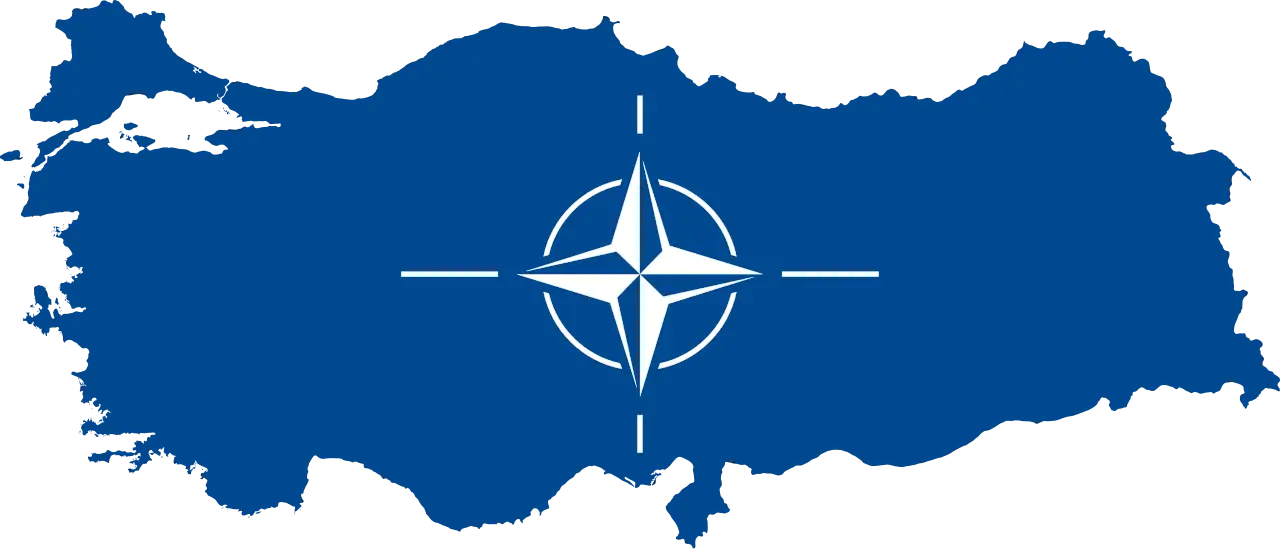
When the United States and Israel launched strikes on Iran on February 28, 2026, every NATO member was forced to decide where it stood. Most followed Washington’s lead quietly, if not enthusiastically. Spain refused use of its bases and triggered a furious response from the White House. France and Germany called for restraint. Turkey reacted in a way that was more complex than the other countries. It condemned the strikes as a violation of international law and blocked coalition forces from using its airspace and bases. When Iran’s Supreme Leader was assassinated, Turkey publicly mourned the loss.
However, when an Iranian ballistic missile flew over Iraq and Syria and landed in Turkish territory on March 4, Turkey did not escalate the situation. Instead, it expressed equal criticism of both sides, chose not to invoke Article 5, and quietly continued its shuttle diplomacy. In the space of six days, Ankara managed to antagonise Washington, shelter Tehran, and still keep a seat at every table that matters.
This is not incoherence. It is strategy. And to understand why Turkey’s behaviour in this war is more alarming than it appears, one must look not at what Erdogan is saying but at what he is positioning himself to inherit once the shooting stops. Because while the US and Israel are focused on destroying Iran’s military architecture, Turkey is quietly mapping the post-Iran regional order and calculating how to occupy the vacuum that Washington’s war is creating.
The Ally that Blocked the Alliance
The operational significance of Turkey’s refusal to cooperate with the US-Israel campaign is larger than the headlines suggest. Turkey hosts the Incirlik Air Base, a NATO installation carrying American tactical nuclear weapons as well as the Kürecik radar base, which is part of the alliance’s missile defence architecture. Turkish Foreign Minister Hakan Fidan claimed on March 3 that Ankara had “delayed the start of the war” through its diplomatic efforts and that it would not allow use of Turkish airspace for offensive operations against Iran. The Trump administration, which did not publicly contest this claim, said nothing.
In a formal statement issued from the Turkish presidency’s communications directorate on February 28, Erdogan said he was “deeply saddened and concerned” by the US-Israeli strikes on Iran, attributed the war entirely to “Netanyahu’s provocations,” and conspicuously made no reference to the United States as a co-belligerent, a framing that analysts at Brookings noted reflected Ankara’s desire to believe Trump had been “dragged into the war by Israel.” He condemned Iranian retaliatory strikes on Gulf states as “unacceptable” but in the same statement, described Iran as a “neighbour” and “friendly and brotherly” people. Erdogan had already set the tone in January 2026, publicly congratulating Iranian President Pezeshkian for his “handling” of the nationwide protests that had left thousands dead effectively endorsing Tehran’s framing that the demonstrations were foreign-backed terrorist plots.
What Ankara did not do is as significant as what it said. It did not close the Bosphorus to any party. It did not expel Iranian diplomats. It did not formally condemn the killing of a head of state by a NATO ally. An Asal Research poll taken across 26 Turkish provinces showed that only 4 percent of Turkish respondents supported Israel in the conflict, while 72.5 percent preferred Turkey to act as a mediator. Erdogan’s public posture i.e., condemnation of all sides, appeals to international law, shuttle diplomacy mapped almost perfectly onto Turkish public opinion while leaving every strategic option open.
The Missile that Changed Nothing by Design
On March 4, a ballistic missile launched from Iranian territory, flying over Iraq and Syria, was intercepted by NATO defence assets over the eastern Mediterranean. Debris fell in an open area in the Dörtyol district of Hatay province, southern Turkey. No casualties were reported. Turkey’s Ministry of National Defence confirmed the incident, reserved the right to respond to hostile actions, and warned all parties against escalation. NATO Secretary General Mark Rutte stated the alliance stood firmly with Turkey. US Secretary of Defense Pete Hegseth dismissed any prospect of Article 5 being triggered.
Iran denied deliberately targeting Turkish territory, calling the incident a “technical anomaly.” Turkey invoked Article 4 which allows for consultations between allies when a member’s security is threatened but stopped far short of the Article 5 collective defence trigger. The entire episode was resolved within hours through what German newspaper FAZ called a perfectly coordinated three-level de-escalation: NATO said there was “absolutely no one” who believed in alliance involvement; Washington said there was no reason for Article 5; and Ankara itself provided the exit ramp by framing the missile as off-course and accidental.
The strategic implication is significant. Iran fired whether deliberately or not, a ballistic missile that landed on NATO soil, near an installation housing American nuclear weapons. The alliance’s response was to move on as quickly as possible. For Erdogan, the incident was a net gain: he received a formal NATO declaration of solidarity, demonstrated Turkey’s indispensability to the alliance, issued warnings to Tehran that sharpened his mediator credentials, and avoided any military commitment. The missile that should have forced Turkey’s hand left its hands entirely free.
The Kurdish Card: Erdogan’s True Red Line
If there is one development in this war that genuinely unsettles Ankara, it is not Iranian missiles. It is the CIA’s Kurdish plan. CNN reported on March 3 that the CIA is actively working to arm Iranian Kurdish forces with the aim of fomenting an internal uprising against the regime. Axios reported on March 5 that Trump had personally spoken by phone with Masoud Barzani and Bafel Talabani, the leading Kurdish figures in Iraqi Kurdistan as well as Mustafa Hijri, president of the Democratic Party of Iranian Kurdistan. Israeli promises of political support for a Kurdish autonomous region in a post-regime Iran were also reported.
For Turkey, this is an existential alarm. Erdogan had spent years working to suppress PKK-linked Kurdish autonomy in Syria, and regarded the December 2024 fall of Assad and the subsequent weakening of Syrian Kurdish forces as a major strategic victory. The prospect of an American and Israeli-backed Kurdish autonomous zone emerging on Turkey’s southeastern border, this time in Iran represents precisely the scenario Ankara has structured its regional strategy to prevent. As Turkish policy analyst Haşim Tekineş put it, a secular, Western-aligned post-regime Iran that made peace with Kurdish aspirations would represent a “regional balance that weakens Turkey’s leverage” significantly.
Carnegie Endowment analyst Alper Coskun warned that if Washington proceeds with Kurdish cooperation in ways that disregard Ankara’s security interests, “this war could quickly evolve into another fault line in US-Turkish relations.” The pattern from Syria where Turkey’s early opposition to US-Kurdish cooperation left it sidelined and eventually forced into accommodation is still fresh. Tekineş observed that if Erdogan fails to dissuade Trump from the Kurdish plan, Ankara would likely shift from opposition to participation: seeking influence over Iranian Kurds alongside the US rather than watching the process unfold without Turkish involvement.
The Succession Game: What Turkey Wants the Day After
Brookings’ analysis of the conflict, published on March 5, noted that “one consequence is already coming into view: this war is sharpening the enmity between Turkey and Israel, pushing them closer to a long-term collision.” It characterised Turkish and Israeli regional ambitions using the language their own officials have deployed against each other: accusations of “neo-Ottomanism” and “Greater Israel” respectively. Their rivalry, already intensified across Syria, the Eastern Mediterranean, and the Horn of Africa, is now extending into Iranian territory itself.
Turkey’s endgame in a post-Iran regional order is not neutrality and it is not peacekeeping. It is specifically the succession to Iran’s role as the primary counterweight to Israeli and Gulf Arab influence in the broader Middle East. Iran has, for decades, provided strategic depth to movements that challenged American and Israeli primacy in the region: Hezbollah in Lebanon, Hamas in Gaza, the Houthis in Yemen, and a network of Shia militias across Iraq and Syria.
As Iran’s capacity to sustain these networks is degraded by ongoing US-Israeli strikes, the question of who fills that role is now live. Turkey with NATO’s second-largest army, a rapidly expanding drone industry, a government-linked military contractor training militias across the Muslim world, and years of cultivated influence in Gaza, Libya, Somalia, and the Sahel, is positioned potentially to inherit significant portions of that network.
The domestic political arithmetic reinforces this. Erdogan’s government faces a Turkish public that is 72 percent in favour of mediation and deeply hostile to both Israel and the United States. Playing the role of the Muslim world’s principled defender, the leader who refused to join the coalition, mourned Khamenei, and kept diplomacy alive, costs Erdogan nothing internationally while generating genuine political capital at home. And the F-35 negotiations, ongoing since Trump’s September 2025 White House meeting with Erdogan, ensure that Ankara keeps Washington’s attention even as it undermines Washington’s operation.
A NATO Member Playing for the Vacuum
The uncomfortable truth that Washington and its alliance partners have not yet confronted is this: Turkey is a NATO member that blocked a NATO-member-led operation, sheltered the diplomatic interests of the target state, and is now positioning to absorb the regional influence of the country being destroyed. It has done all of this while maintaining full alliance membership, keeping the Bosphorus open, continuing F-35 re-entry negotiations, and hosting American nuclear weapons on its soil. No other NATO member could have managed this geometry. No other NATO member would have tried.
If the Iran war eventually ends in regime change, what follows it will be a contest over the regional order that Iran’s collapse has made available. Israel will claim its security architecture. The Gulf states will consolidate their economic leverage. The United States will declare victory and manage the aftermath from a distance. And Turkey will be there having condemned the war, outlasted the fighting, and quietly moved its pieces into the spaces that others created. Erdogan’s endgame is not neutrality. It never was. The question for Washington is whether it will recognise a strategic rival until it is too late and whether an alliance built for the Cold War has any institutional mechanism to handle a member that plays both sides of its wars.
Featured Image Credit: Giorgi Balakhadze.
About the Author
Anirudh Phadke is the Founder, Publisher & Editor of The Viyug. He previously worked for International Criminal Police Organization (INTERPOL). He was also a Member of the Board of Studies (BoS) for the Department of Defence & Strategic Studies at the Guru Nanak College (Autonomous). Anirudh holds a Master of Science in Strategic Studies along with a Certificate in Terrorism Studies from S. Rajaratnam School of International Studies (RSIS) at Nanyang Technological University (NTU). He completed Bachelor’s degree in Defence & Strategic Studies from Guru Nanak College (Autonomous).


2 thoughts on “NATO’s Most Dangerous Member Just Got More Dangerous”