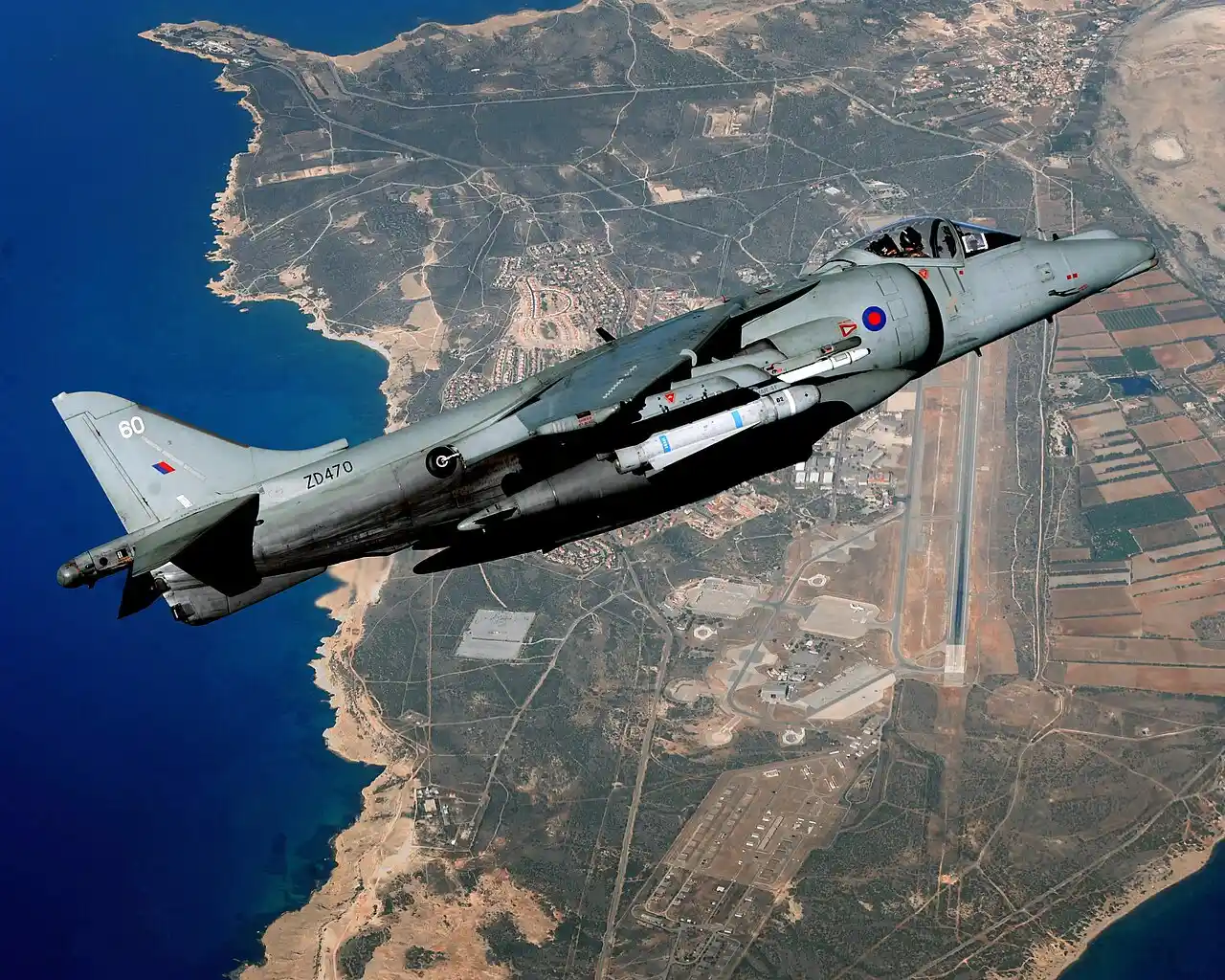
On the evening of 1 March 2026, Sir Keir Starmer addressed the House of Commons and set out a seemingly firm boundary. Britain, he stated, would permit American forces to use selected UK bases for narrowly defined defensive operations against Iranian missile sites nothing beyond that. There would be no British aircraft conducting strikes and no deployment of troops into active combat. His language was deliberate and restrained. Yet within an hour, a drone struck the runway at RAF Akrotiri in Cyprus. The aircraft involved had taken off before Starmer had even finished speaking.
Although the damage was limited and no lives were lost, the symbolic impact was far greater. The incident exposed a widening gap between official rhetoric and unfolding reality. That brief interval encapsulates how Britain assumed the role of a combatant while continuing to deny it.
This transition unfolded over the course of ten days, each step presented as a final limit. On 28 February, as American and Israeli strikes against Iran commenced, Starmer maintained that Britain was not participating. He acknowledged that British aircraft were already airborne, but described their role strictly as defensive, aimed at protecting allies and national interests. By 1 March, he had approved the use of British bases for American operations, again framed as defensive. While this distinction carried weight in Westminster, it held little significance in Tehran. By 7 March, HMS Prince of Wales had been placed on five days’ readiness to deploy.
RAF Typhoons and F-35s were conducting repeated interceptions from Akrotiri and other forward positions. Meanwhile, American bombers operated from Diego Garcia and RAF Fairford with explicit British consent. Ministry of Defence briefings on 11 and 13 March confirmed continued defensive sorties and the reinforcement of British assets in the eastern Mediterranean. Each measure was described as limited and conclusive, yet each threshold was subsequently surpassed. Despite this escalation, the government maintained its central claim: Britain was not at war.
This formulation served significant political and legal purposes. It allowed the government to avoid direct parliamentary confrontation, where the legacy of the Iraq War continues to shape debate. Starmer repeatedly invoked the lessons of 2003, emphasising the absence of open-ended commitments and the publication of legal justifications in summary form. The government grounded its position in Article 51 of the UN Charter, invoking the right to collective self-defence.
By consistently categorising British actions as defensive, ministers circumvented the need for a parliamentary vote on offensive military engagement. This language also helped stabilise public opinion. Supporting defensive measures, such as safeguarding shipping routes or intercepting missiles, is far more politically acceptable than endorsing offensive operations against Iran. The insistence that Britain was “not at war” enabled Starmer to balance alliance obligations with domestic caution, reassuring both Parliament and international partners while maintaining flexibility.
At the same time, Britain had already entered into commitments that could draw it into another conflict. In January 2026, the United Kingdom and France joined Ukraine in a formal Declaration of Intent, pledging to lead a multinational force following any future ceasefire. This initiative, known as the Coalition of the Willing, envisions the establishment of military hubs across Ukraine to support training, deterrence, and reconstruction. However, as of mid-March, no ceasefire had been achieved. Russian forces continued offensive operations in the Donbas and northern Kharkiv regions.
British reconnaissance missions and special forces were reportedly already assisting Ukrainian efforts. Consequently, Britain faced the prospect of simultaneous obligations: preparing for a future deployment in Ukraine while actively supporting operations connected to the Iran conflict. Both commitments draw upon the same finite pool of military resources, creating a strain that is strategic rather than theoretical.
These pressures were immediately evident in Parliament. The shadow of Iraq informed every exchange, prompting repeated assurances that the current situation differed fundamentally from past interventions. However, the situation in Cyprus introduced an additional layer of complexity. Although Akrotiri and Dhekelia are sovereign British territories, they are located within an EU member state.
Following the drone strike, Cyprus expressed concern and turned to the European Union’s mutual defence provision, Article 42.7 of the Lisbon Treaty. While Cyprus did not formally invoke the clause, it sought bilateral assistance. Greece deployed naval assets, and France, among others, offered support. These actions effectively tested the clause in practice, even without formal activation.
For Britain, this created an unusual predicament. As a non-member of the EU, it cannot invoke or be bound by Article 42.7. Nevertheless, its sovereign bases on Cypriot soil became targets. The United Kingdom thus provided the infrastructure that attracted attack while lacking access to the EU’s formal mechanisms for coordinated defence.
This situation highlighted the strategic ambiguities of post-Brexit Britain: a military power with assets embedded in EU territory, yet institutionally detached from its collective defence framework. The response relied on ad hoc cooperation rather than established treaty obligations, leaving key aspects of coordination undefined.
More broadly, this episode reflects a structural dilemma faced by mid-level powers aligned with the United States. Once alliance dynamics are engaged, control over how national infrastructure is used becomes limited. Similarly, distinctions between defensive and offensive actions may hold legal significance domestically but are unlikely to influence adversaries. Iran did not differentiate between British defensive operations and American offensive strikes facilitated by British bases. From its perspective, those bases constituted legitimate targets. The strike on Akrotiri was therefore not incidental but a direct response to Britain’s operational role.
The assertion that Britain is “not at war” is not merely rhetorical. It represents an effort to reconcile competing pressures: parliamentary scrutiny shaped by historical precedent, alliance expectations from the United States, public reluctance toward prolonged Middle Eastern involvement, and ongoing commitments related to Ukraine. Nevertheless, the gap between language and reality continues to narrow. British aircraft remain engaged, bases continue to support allied operations, and military assets are on heightened readiness, all while the official position remains unchanged. Carefully chosen language has sustained this stance, but its durability is increasingly uncertain.
This raises an unavoidable question: what developments would compel a shift in that position? A direct British strike on Iranian territory, the loss of personnel, or a formal expansion of operational involvement could all serve as turning points. Alternatively, the shift may occur more subtly, as public opinion, parliamentary consensus, or allied expectations render the current distinction untenable. Until that moment arrives, Britain occupies an ambiguous position functioning as a participant in conflict while formally denying belligerence. The distance between those two realities continues to diminish.
All the views and opinions expressed are those of the author. Image Credit: LA (Phot) Luis Holden, Defence Imagery.
References
- UK Government, PM statement on Iran, 1 March 2026.
- UK Government, Statement on the conflict in the Middle East, 20 March 2026.
- Ministry of Defence updates on UK operations in the Middle East, 11 and 13 March 2026.
- Hansard, Commons debates on Middle East, 2 and 11 March 2026
- Wikipedia summary of 2026 drone strikes on Akrotiri and Dhekelia.
- Reuters, “Drone strike drives calls to end British military presence on Cyprus,” 6 March 2026
- BBC, “UK aircraft carrier given five days to be ready to deploy,” 7 March 2026
- Institute for the Study of War, Russian Offensive Campaign Assessment, 13 March 2026
- UK-France-Ukraine Declaration of Intent, published 7 January 2026
- European Parliament and media reporting on Article 42.7
About the Author
Jaiee Ashtekar holds a bachelor’s degree and a master’s degree in political science from the University of Mumbai. She holds a post-graduate diploma in international relations from the University of Strathclyde, United Kingdom (UK). She has done projects titled “Kashmir through Political Perception” and “Water issues between India and Pakistan”.