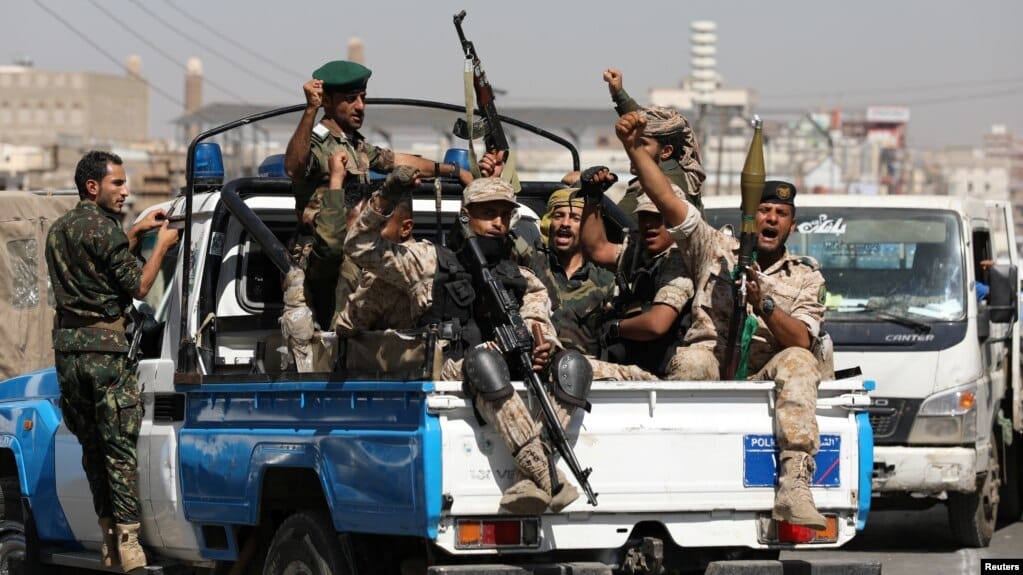
The Yemen war, which has lasted for over a decade, has shifted from a coalition effort against the Houthis to a conflict highlighting a growing divide between Saudi Arabia and the United Arab Emirates (UAE). What started as a coordinated effort has turned into a struggle for influence, territory, and strategic gain, with Yemen as the primary battleground.
From Cooperation to Competition
Historically, Saudi Arabia and the UAE shared security interests throughout the Arabian Peninsula. Both nations were concerned about instability, extremist groups, and Iranian expansion. Their partnership strengthened after the Arab Spring, leading to their intervention in 2015 to restore Yemen’s internationally recognised government following the Houthi takeover in Sanaa. The roles were straightforward: Saudi Arabia led the air campaign and managed political efforts, while the UAE handled ground operations and trained local forces.
However, underlying this cooperation were differing strategic objectives. Saudi Arabia wanted a unified Yemen to secure its southern border and counter Iran. The UAE increasingly focused on southern Yemen, particularly its ports, islands, and vital maritime routes, while building local partnerships that aligned with its security and business interests.
By 2017, the UAE shifted from direct military action to an indirect proxy strategy. Abu Dhabi strongly supported the Southern Transitional Council (STC), which aimed for autonomy or independence for South Yemen. Even after the UAE announced its withdrawal in 2019, evidence showed ongoing logistical and military backing for STC-aligned groups. This strategy directly undermined Saudi efforts to restore a unified Yemeni state. As the STC gained power in southern cities, tensions rose with Saudi-backed forces, revealing fractures within the coalition.
Riyadh Agreement is a Failed Fix
To address the infighting, Saudi Arabia brokered the 2019 Riyadh Agreement to integrate the STC into governmental structures. The goal was to merge forces, share power, and promote Yemen’s unity. However, the implementation quickly stalled. The STC retained control over territory, military integration failed, and UAE-backed units operated independently. Instead of resolving tensions, the agreement deepened competition within the anti-Houthi coalition.
Key Turning Points and Escalation
Between 2017 and 2025, various events fuelled rivalry:
- The UAE fully moved to proxy warfare.
- Economic competition intensified as both countries sought regional dominance.
- Disputes arose within OPEC over production quotas.
- The two nations supported opposing factions in Sudan.
- Rising tensions peaked in 2025 with STC offensives across eastern Yemen.
The breaking point occurred in December 2025, when Saudi jets targeted the port of Mukalla, claiming it was linked to UAE-armed shipments to the STC. Saudi-backed authorities declared an emergency, canceled cooperation agreements with the UAE, and ordered Emirati forces to leave Yemen. The UAE denied these claims and refused to arm Yemeni factions, yet the strike marked the end of what had been a close alliance.
STC’s Oil Gambit
The STC’s “Operation Promising Future” captured large areas of Hadramout and Mahra, including key oil facilities. Controlling these resources gave the STC financial power and leverage in negotiations. For Saudi Arabia, this loss was both strategic and symbolic. Halting production made Yemen’s humanitarian and economic crises worse, disrupted energy supplies, and increased instability.
Saudi Arabia sees Yemen as crucial for state integrity, border security, and regional influence. The UAE prefers to strengthen local partners, control maritime routes, and counter extremist groups. These conflicting priorities shifted battlefield allies into geopolitical rivals. External players complicated the conflict further. Iran’s support for the Houthis, U.S. involvement in counterterrorism, and increasing Emirati-Israeli cooperation in maritime security all altered the balance.
Humanitarian and Legal Fallout
As Gulf rivalries intensified, civilians suffered the most. Airstrikes, blockades, proxy fighting, and economic collapse have created one of the world’s worst humanitarian crises. Violations of international humanitarian law, including indiscriminate attacks and misuse of civilian infrastructure, have been widely reported. Fragmentation has weakened peace prospects, empowered armed groups, and deepened territorial divides between the north and south.
Leadership dynamics in both countries shape their policies. In Saudi Arabia, the desire to project strength and achieve Vision 2030 goals drives aggressive external strategies. In the UAE, centralised decision-making and a focus on security foster reliance on proxies and control over strategic areas. Personal rivalries and competition for regional leadership heighten institutional disagreements.
Regional Implications
The Saudi-UAE rift threatens the cohesion of the Gulf Cooperation Council, complicates mediation efforts, and increases the risk of Yemen’s division. With the Houthis entrenched in the north and the STC strong in the south, the conflict risks solidifying into separate political entities, impacting security, trade, and diplomacy for years to come.
Some signs suggest both Riyadh and Abu Dhabi want to avoid direct clashes, but deep-rooted disagreements persist. Possible paths to de-escalation include negotiated autonomy, phased withdrawals, or revised coalition agreements. Success depends on political compromise, credible mediation, and prioritising civilian protection, conditions that currently remain fragile.
Ending Note
Yemen has become a battleground in the larger divergence between Saudi Arabia and the UAE. What once appeared as a united effort has evolved into rivalry driven by security concerns, economic ambitions, and proxy conflicts. The escalation in December 2025 showcases the limits of coalition warfare and the risks of fragmented strategies. Without continued diplomacy and renewed commitment to the people of Yemen, the conflict risks worsening division, prolonging instability, and reshaping Gulf politics for years to come.
All the views and opinions expressed are those of the author. Image Credit: Unknown Author | Voice of America.
About the Author
Jaiee Ashtekar holds a bachelor’s degree and a master’s degree in political science from the University of Mumbai. She holds a post-graduate diploma in international relations from the University of Strathclyde, United Kingdom (UK). She has done projects titled “Kashmir through Political Perception” and “Water issues between India and Pakistan.”

One thought on “Yemen is No Longer About the Houthis”