Last year, I discussed ten global conflicts to watch in 2025 – not as predictions, but as a pressure points in an international system already under strain. As the year unfolded, several of those fault lines ruptured faster and more violently than anticipated. From the sudden escalation between India and Pakistan, to the grinding persistence of the war between Russia and Ukraine and the collapse of order in several parts of Africa and West Asia (Middle East), 2025 underscored a sobering reality: global conflict today is less about isolated flashpoints and more about systemic instability feeding local crises.
As we moved into 2026, the world is no longer merely “watching” conflicts – it is living with them. Civil war in Sudan has deepened into a regional humanitarian catastrophe, Ukraine remains locked in a war of attrition with global consequences, India-Pakistan tensions continue to cast a long shadow over South Asia and multiple theatres across Central Africa are sliding into protracted violence. This special newsletter revisits the evolving conflict landscape and examine what these wars reveal about power, governance and the fragility of the current global order and why their trajectories in 2026 matter far beyond their immediate borders.
Global Conflicts in 2026: An India-Centric Risk Snapshot
1. U.S. Confrontation with Venezuela
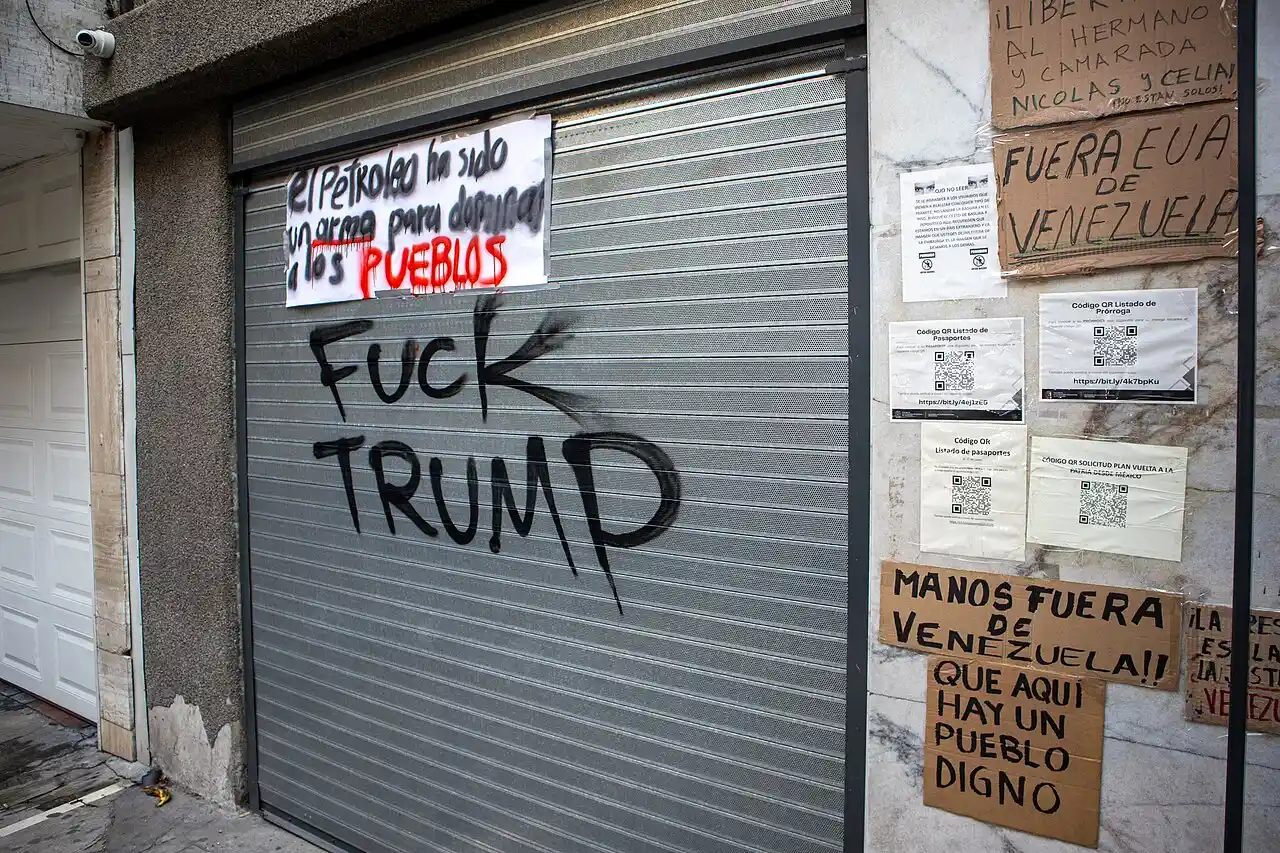
The confrontation between the United States and Venezuela has escalated dramatically into a defining geopolitical crisis of 2026. On 3 January 2026, the U.S. launched Operation Absolute Resolve, a major military strike on Venezuela that targeted military installations and resulted in the capture of President Nicolás Maduro and his wife, who were flown to New York to face U.S. narcotics and narco-terrorism charges—a culmination of months of rising tensions over alleged drug trafficking and sanctions enforcement.
The strike marked one of the most direct U.S. interventions against a sitting head of state in Latin America in decades and has sparked intense debate over its legal and regional implications. International bodies including the UN Security Council have warned that the action could undermine international law and fuel broader instability, while Washington argues the operation is part of a broader campaign to disrupt narco-trafficking and reassert hemispheric influence amidst strategic competition with China and Russia.
2. Civil War in Sudan
Sudan’s civil war, now deep into its third year, remains one of the most intractable and devastating conflicts in the world. What began in April 2023 as a power struggle between the Sudanese Armed Forces (SAF) and the paramilitary Rapid Support Forces (RSF) has fragmented the country, triggering widespread violence across Khartoum, Darfur, Kordofan and beyond. Despite the army’s recent return to Khartoum after years in exile, fighting persists and ceasefires have repeatedly failed, leaving basic services in collapse and millions in desperate need of aid. More than 33 million Sudanese are estimated to require humanitarian assistance in 2026 as the health system teeters on the brink and acute food insecurity deepens.
The human toll has been staggering: civilians face rampant attacks, displacement and hunger, with women disproportionately affected by the crisis. Neighbouring states are increasingly concerned that the conflict could spill across borders, raising fears of broader regional destabilisation.
3. Confrontation over Taiwan
This region remains one of the most volatile geo-strategic flashpoints in 2026, driven by intensifying military, political, and diplomatic pressures across the Taiwan Strait. In late 2025, China’s People’s Liberation Army conducted expansive war games dubbed Justice Mission 2025, deploying dozens of aircraft, naval vessels and live-fire exercises encircling the island — moves Beijing characterised as deterrence against “separatism” and external interference after the U.S. approved an $11 billion arms package for Taiwan. Taipei condemned these operations as provocative, while Washington warned they needlessly raise regional tensions.
Beijing has doubled down on its rhetoric by blacklisting Taiwanese officials over alleged “independence activities” and framing defence cooperation with the U.S. as destabilising to peace. Analysts warn that this escalating cycle of drill exercises, diplomatic pressure, and high-stakes signalling could increase the risk of miscalculation, drawing in the United States and regional actors as Taiwan continues to strengthen its self-defence posture and political resolve.
4. Civil War in Myanmar

Myanmar’s civil war, now in its fifth year since the 2021 military coup, remains a complex and brutal struggle with no end in sight. The ruling junta is attempting to consolidate power through a controversial general election held in phased rounds across conflict-affected areas, a process widely criticised as illegitimate amid ongoing violence and repression. Reports highlight heavy fighting between the military, ethnic armed organisations and People’s Defence Forces, with critical battles occurring across regions such as Rakhine, Kachin and Sagaing, underscoring the fragmentation of armed resistance and the junta’s difficulty regaining control.
The humanitarian toll continues to deepen: millions are internally displaced, basic services have collapsed, and children face severe deprivation. At the same time, a landmark genocide case against Myanmar’s military opened at the International Court of Justice, focusing on atrocities against the Rohingya people and potentially setting significant legal precedents.
5. Iran’s Conflict with Israel and the United States
The confrontation between Iran, Israel, and the United States remains one of the most dangerous and unpredictable geopolitical flashpoints in 2026. After a brief but intense war in June 2025 that saw Israeli strikes on Iranian nuclear and military infrastructure and subsequent U.S. airstrikes on Iranian nuclear sites, tensions have persisted despite an informal cessation of hostilities. Analysts warn that this pause is fragile, with Iranian leaders asserting there is no formal ceasefire and preparing for renewed confrontation at any moment. Tehran continues to reject nuclear negotiations with Washington, accusing the U.S. of backing Israeli military actions and undermining diplomacy.
At home, Iran faces deepening instability marked by widespread protests and a deadly crackdown, which the regime blames on foreign interference and uses to justify heightened national defence rhetoric. In response, Israeli authorities remain on high alert for possible U.S. intervention should regional dynamics deteriorate further, while Washington maintains pressure through threats of force and its strategic support for Israel.
6. Conflict between India and Pakistan
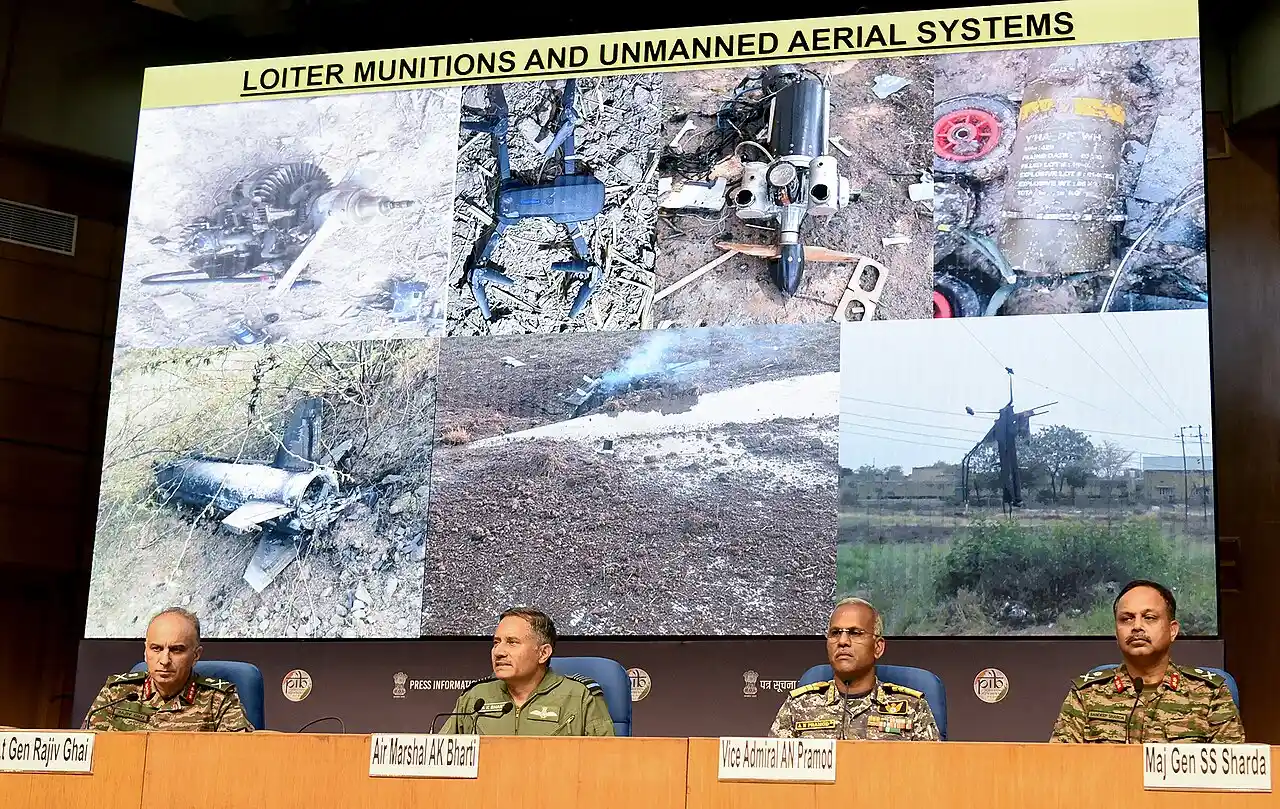
The military confrontation between India and Pakistan is a central flashpoint in South Asia, rooted in long-standing tensions over terrorism, territorial disputes, and strategic competition. In May 2025, a deadly terrorist attack in Pahalgam, Jammu and Kashmir prompted New Delhi to suspend the Indus Waters Treaty, expel diplomats and launch Operation Sindoor — precision airstrikes targeting terror infrastructure in Pakistan and Pakistan-administered Kashmir (PoK). Islamabad responded with cross-border shelling and drone/missile activity along the Line of Control (LoC), prompting intense exchanges before a ceasefire was agreed on 10 May 2025.
Despite the cessation of major hostilities, tensions remain high. A recent US think-tank report warns of a moderate likelihood of renewed conflict in 2026 driven by ongoing militant activity and unaddressed grievances, while both sides maintain heightened military readiness. Additionally, security incidents such as suspected Pakistan-origin drones near Jammu and Kashmir underscore persistent volatility along the border.
7. Conflict in Yemen and the Red Sea
The civil war in Yemen, long overshadowed by wider Middle Eastern crises, remains deeply destabilising in 2026 and has expanded into a broader Red Sea security crisis with global implications. Yemen’s multifaceted conflict now pits the Iran-aligned Houthi movement against Saudi-backed government forces and southern separatists, with shifting alliances and intermittent offensives reshaping the battlefield. Recent gains by the Southern Transitional Council (STC) and ensuing tensions between Saudi Arabia and the UAE underscore fractures within the anti-Houthi coalition, prompting Saudi airstrikes and political upheaval in Aden and beyond.
At the same time, the Houthis’ prolonged campaign of missile and drone attacks on Red Sea shipping — aimed at vessels perceived as linked to Israel and Western interests — has threatened a vital global trade artery, prompting U.S. and allied responses to protect maritime security. Although attacks dipped following regional ceasefires, the risk to freedom of navigation persists amid ongoing violence and fragile intermediary agreements.
8. Conflict in the Democratic Republic of Congo (DRC)
Conflict in the DRC remains one of the world’s most severe and enduring crises, with violence intensifying across the eastern provinces starting this year. Armed clashes between the Rwanda-backed M23 rebel group and Congolese government forces have continued despite peace efforts, including a framework agreement and rebel withdrawals from key towns such as Uvira. M23’s expansion, including symbolic events in Goma, highlights ongoing instability and persistent hostilities in North and South Kivu provinces.
Civilians bear the brunt of this protracted war: humanitarian conditions have deteriorated sharply, with nearly 3 million people displaced due to recent fighting and many more lacking basic services and food security. Attacks by Islamic State-linked militias, including assaults on civilians, underscore the multi-layered nature of the crisis, with sexual violence and mass suffering reported across conflict zones.
9. Violent Extremism in the Sahel
Jihadist groups exploit political vacuums, weak governance, and shifting regional dynamics to expand their reach across West Africa. Islamist armed organisations such as Jama’at Nasr al-Islam wal Muslimin (JNIM) and the Islamic State – Sahel Province (ISGS) have carried out increasingly lethal attacks on military, civilian, and security targets in Mali, Burkina Faso, and Niger, contributing to one of the deadliest terrorism environments globally and displacing millions. Attacks have included assaults on army bases and villages, reflecting the deepening insecurity that now spills into neighbouring coastal states such as Benin and threatens areas near Senegal.
The collapse of traditional counter-terrorism partnerships following withdrawals of Western forces, the emergence of military juntas, and diminishing preventive engagement have compounded the crisis, leaving regional efforts fragmented. Analysts warn that the Sahel remains a focal point of global extremist violence in 2026, with attacks escalating as armed groups consolidate territorial influence and exploit local grievances.
10. Instability in the Northern Triangle
Violent instability across the Northern Triangle of Central America remains acute in 2026, driven by entrenched gang activity, political fragility, and deep social insecurity. In late 2025, authorities in Guatemala and El Salvador undertook high-profile operations against criminal networks — arresting suspected MS-13 members and human-trafficking suspects — even as Honduras grappled with contested election results and rising political tensions. These events reflect broader challenges in implementing anti-gang laws and maintaining public order.
Despite some reported declines in homicide rates in parts of the region, underlying drivers of instability persist. Weak rule of law, pervasive organised crime, and limited economic opportunity continue to fuel violence and displacement, leaving millions vulnerable. Humanitarian needs remain high, with UN agencies mobilising support for over 4.6 million people affected by violence, food insecurity, and climate shocks.
The crisis underscores the persistent fragility of governance and security in the Northern Triangle, where entrenched criminal violence intersects with political strains and inadequate social protection.
Ending Note
Taken together, these ten conflicts underscore a defining feature of the current international moment: violence is no longer confined to isolated theatres but is increasingly interconnected, prolonged, and resistant to resolution. From great-power confrontations and regional rivalries to civil wars and extremist insurgencies, today’s conflicts reflect deeper structural stresses like fragile governance, contested legitimacy, economic strain, and a weakening global conflict-management architecture.
As 2026 unfolds, the challenge for policymakers and observers alike is not merely to track where violence occurs, but to understand how these crises reinforce one another and reshape the global order. Ignoring them risks normalising instability; engaging with them demands sustained analysis beyond headlines and short-term reactions.
Featured Image: Syced.
About the Author
Anirudh Phadke is the Founder, Publisher & Editor of The Viyug. He is currently serving as a Member of the Board of Studies (BoS) for the Department of Defence & Strategic Studies at the Guru Nanak College (Autonomous). He previously worked for International Criminal Police Organization (INTERPOL).
He holds a Master of Science in Strategic Studies along with a Certificate in Terrorism Studies from S. Rajaratnam School of International Studies (RSIS) at Nanyang Technological University (NTU). He completed Bachelor’s degree in Defence & Strategic Studies from Guru Nanak College (Autonomous).