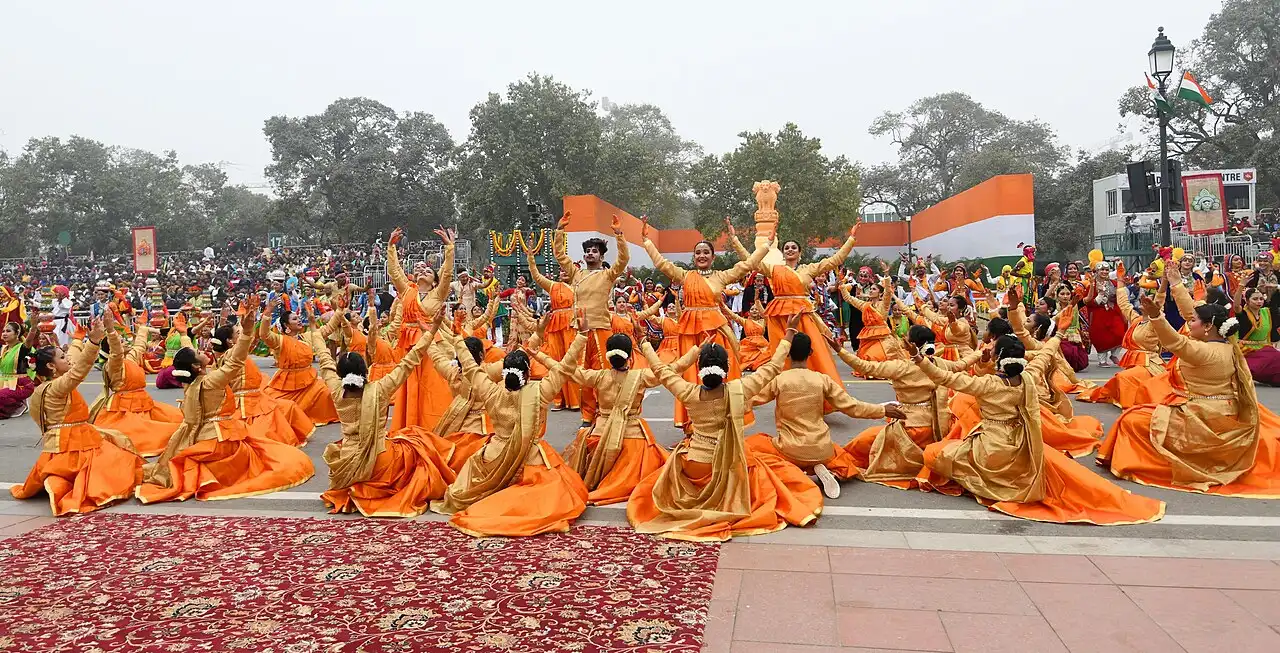
This question has crossed my mind several times before, but earlier I never found a clear answer. Perhaps it was because, back then, I never thought of jotting these thoughts down, sitting with them, and thinking a little deeper. Over time, however, this question kept returning quietly, persistently until it demanded articulation. Many of us who use Instagram might have come across reels with the caption “Bohot zor se 26 January aa raha hai.”
The enthusiasm is loud and almost infectious. But the real question lies beyond the reel itself: does patriotism come only with a date stamp of 15 August and 26 January? The irony is evident. The very next day, flags are folded carelessly or left as waste on the roads, and the idea of the nation is once again reduced to hashtags, trends, and holidays.
Till the time I was in school, these days were enjoyable. We danced, skipped classes, were given laddoos, and listened to speeches on moral duties and national values that were meant to be reinforced in real life. But back then, they were only speeches words we tended to ignore rather than critically reflect upon. Those were fun days, no doubt. Yet, as we grow older, we begin to look around, to observe our surroundings, and to truly think about what those speeches were trying to convey and why they mattered.
This naturally leads to a larger question: where does all this patriotism go for the rest of the year?
Patriotism does not merely mean displaying responsibility on specific dates. It also gives us the right and the duty to question accountability throughout the year. Patriotism is not limited to chanting slogans; it demands their implementation in everyday life. It asks us to empathise with what is happening around us and to stay engaged even when it is uncomfortable. Loving the country also means questioning it, especially when things go wrong.
Multiple events occur across the country every second where this sense of responsibility should be channelised. Yet, instead of addressing them, we often choose to ignore. In an era where almost everything is digitised, the spread of information is instantaneous. It takes only a millisecond to upload content online, giving millions access to it. Despite this, people continue to ignore serious issues rather than expressing the same patriotic emotions they display on national holidays.
Beyond criminal incidents, one of the most threatening challenges of recent times has been climate change. This year alone, delayed snowfall in Uttarakhand, Himachal Pradesh, and Jammu & Kashmir left many people awestruck and concerned. These are not isolated environmental changes; they are warnings. Alongside this, incidents reflecting a lack of civic responsibility—such as the recent Noida terror incident raise pressing questions about preparedness, accountability, and public safety.
There have also been multiple heartbreaking incidents over the past year, some of which directly concern the state I come from. The Dharali cloudburst and flash floods on August 5, 2025, the renewed discussions around the Ankita Bhandari murder case, the Kashish case controversy, crowd crushes at the Prayag Maha Kumbh Mela and the New Delhi Railway Station, and the car explosion near Delhi’s Red Fort all demand more than momentary outrage. These events require sustained empathy, justice, and reflection.
Patriotism, in its truest sense, should translate into accountability, safety, justice, and empathy long before and long after two dates on the calendar. Time-bound displays of nationalism often overshadow everyday civic responsibilities, reducing patriotism to performance rather than practice.
The media plays a significant role in shaping public opinion and national consciousness. While studying journalism was never part of my original plan, life has a way of taking us down unexpected paths. Engaging with journalism has helped me form and refine my opinions. However, as highlighted in The Indian Express article dated January 22, 2026 (“Amid cable newsification, journalism must reclaim its role as a check on power”) news platforms are increasingly becoming sources of noise and entertainment rather than factual reporting. Television debates today are louder than ground realities. Nationalism is often turned into spectacle, performed aggressively rather than practiced responsibly.
Ironically, when I was younger and duties were imposed upon me, I felt pressured and disconnected, which made it easier to ignore them. But now, after 23 years of life, I find myself consciously trying to implement these responsibilities. I try to give things thought, to question narratives, and to engage as a young member of this nation. Instead of ignoring issues, I attempt to reflect on them even when doing so is uncomfortable.
This question continues to make me sceptical of the way nationalism and patriotism are understood today. Too often, they seem limited to just two days a year. Perhaps the truest form of patriotism is not how loudly we celebrate the nation, but how honestly we confront its failures.
All the views and opinions expressed are those of the author. Image Credit: Government of India.
About the Author
Shreya Bisht is a student and an emerging writer. She writes on gender and on the random questions that wander through the mind yet often remain unanswered. A storyteller without borders, she is guided by curiosity and grounded in observation. She does not write from a single niche, but from the rhythm of everyday life—fleeting incidents, quiet moments, the art of living, the allure of fashion, the comfort of food, the soul of travel, and the wisdom found in books. Through words and images, she captures what often goes unnoticed, turning the ordinary into something quietly extraordinary.