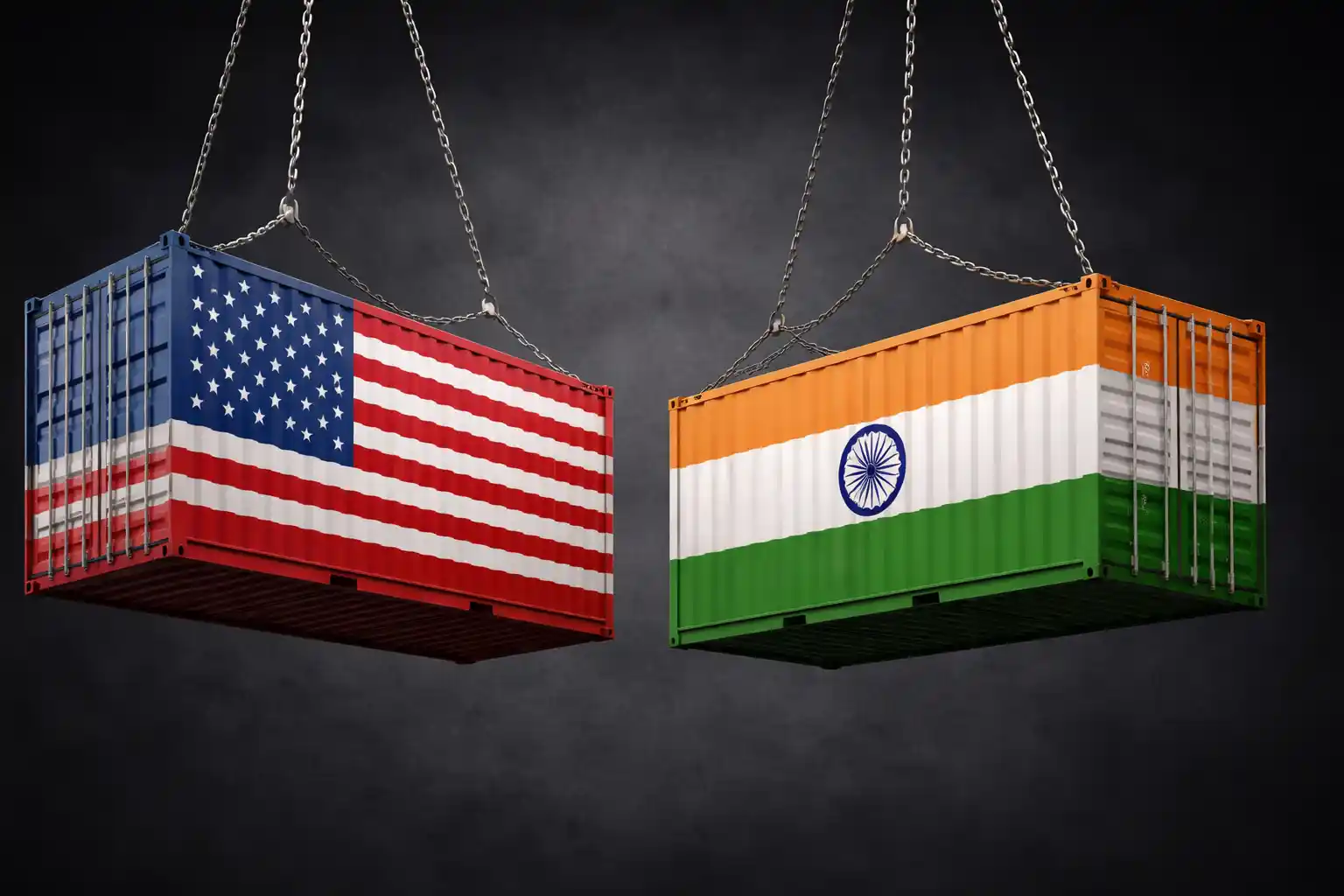
The India-US relationship came to a standstill during the Trump 2.0 administration, with skyrocketing tariffs up to 50 percent since August 2025, creating an economic burden on India. Within the unpredictable geopolitical environment, the interim trade agreement between India and the United States finally came to terms in February 2026, but the recent ruling of the US Supreme Court brought the deal to a halt. The Supreme Court struck down Trump’s sweeping global tariffs, ruling that he cannot use the 1977 emergency powers law to slap blanket duties on nearly every country.
It is against this backdrop that the Indo-Pacific comes into the picture, a region where India and the United States are system-shapers and strategic powers.
The imposition of unreasonable tariffs on India and other states has been a consistent feature for the Trump administration. In 2018, he invoked Section 232 of the Trade Expansion Act of 1962 (19 U.S.C. § 1862) to impose 25 percent tariffs on steel imports and 10 percent tariffs on aluminium. During the first tenure of the Trump administration in 2019, he terminated India’s designation as a beneficiary under the Generalised System of Preference (GSP), a programme under the US to allow duty-free entry of exported products from beneficiary nations. The use of hard power in the form of coercive tariffs on states is used as an economic instrument by powerful nations to pressure other states to change their behaviour and, in turn, exert their supremacy and dominance.
The intervention of the Supreme Court is not merely a legalistic-economic episode but envisions the Indo-Pacific vision as well, conceptualised by both nations, fostering a free, open, and secure regional order. America’s unprecedented tariffs on Indian exports led to supply chain disruptions and production cuts, leading to lower revenues for Indian firms dependent on American markets. Other than trade, India and the United States share several other aspects of cooperation and collaboration as well, including maritime security, transfer of technology and defence cooperation, interoperability exercises, shared norms of democracy, and adherence to a rules-based international order, among others.
Supply chain resilience is an important aspect of India-US relations. Within the strategic undercurrents in the 21st century, Washington strengthened the security vis-à-vis supply chains through institutions like the Indo-Pacific Economic Framework (IPEF) under the Biden administration. China also has a role to play in this. With the Chinese monopoly in sectors like rare earth elements and solar photovoltaic (PV) panels and green tech components, there has been a constant strategic concern among major economies over China weaponising the supply chains and disrupting global trade and commerce.
Amidst this uncertainty, India moulded well in the China Plus One strategy (C+1), wherein companies diversify their manufacturing and sourcing by expanding in countries beyond China to minimise risk. India, being the fourth-largest economy and a close ally of the United States, was very well placed to be an alternative hub of manufacturing. But the advent of the Trump administration prioritised transnationalism, thereby undercutting the logic of diversification.
Multinational firms call for stable market access and predictable tariff regimes to make investments and allocate capital into states other than China. But the unpredictable environment leads to instability and trust deficits not only among exporters but also among multinational firms, raising concerns. Economic stability and supply-chain resilience are the core pillars of the Indo-Pacific vision, and if this unruly behaviour and unpredictability continue, it will disrupt the credibility of a shared vision of a collective and resilient economic architecture.
The Indo-Pacific region is one of the most important and strategically volatile regions in the current geopolitics. It comprises a range of actors, from major powers to middle powers to small island nations. The current scenario between India and the United States is watched closely by the world, including important stakeholders in the Indo-Pacific.
The volatile nature of the historical and traditional relationship between India and the United States raises doubts among the small-island economies of the Indo-Pacific, thereby casting scepticism on the longevity and credibility of the economic and strategic coalitions of the Indo-Pacific, including the Quadrilateral Security Dialogue (Quad), IPEF, etc. If bilateral issues are negotiated peacefully, it will set a precedent among the Indo-Pacific economies that democratic partners can build resilient coalitions to combat challenges and establish a stable and secure regional order.
The fluid geopolitical environment also challenges the strategic autonomy of India, which has been the core pillar of India’s foreign policy, fostering independence in decision-making. Trump has time and again challenged the strategic autonomy of India by imposing hardline tariffs and interfering in its foreign policy choices. During Operation Sindoor in May 2025, Trump claimed that he brokered a deal between India and Pakistan and brought peace, an assertion negated by India but reiterated by the United States in its National Security Strategy (NSS) 2025 as well. In the Indo-Pacific, India has maintained a strategic restraint against constructing formal alliances, as opposed to the United States, which fosters containment of China’s expansionism and establishes formal military alliances.
It is for this reason that India sees the Quad as a coalition of like-minded nations coming together to combat common maritime security challenges in the Indo-Pacific rather than a military alliance. There are differences in the strategic thinking of India and the United States, but India has time and again maintained its strategic autonomy and restraint in the Indo-Pacific. The court’s ruling against the executive orders of the Trump administration aggravates complications in the India-US bilateral relationship, and India needs to mediate this reality in a skilful manner.
The interim trade deal between India and the United States, which has been underway since February 2026, is yet to be formalised. With the Court’s ruling, it is speculated that more clauses will be pushed by India to serve its national interests. Although this has been contradicted by Trump, stating that “Nothing changes; they’ll be paying tariffs, and we will not.” But things are yet to be seen in the coming days as to how the trade deal will unfold amidst the court’s ruling and its long-term implications on the stability of the Indo-Pacific region.
All the views and opinions expressed are those of the authors. Image Credit: THE VIYUG.
About the Authors

Dr. Govind Gaurav is the Project Director for an ICSSR project and Assistant Professor in the Department of Political Science at CMP Degree College, University of Allahabad.

Shruti Rathore is a Research Assistant for an ICSSR project and a Research Scholar in the Department of International Studies, Political Science, and History at Christ (Deemed to be University), Delhi NCR.