Taiwan sits at the centre of one of the defining geopolitical contests of our time. As the United States and China compete over semiconductors, artificial intelligence and critical supply chains, a self-governed island of 23 million people has become strategically indispensable. Yet Taiwan’s influence was not an accident of geography. It was built deliberately under conditions of diplomatic isolation. Since 1971, when UN General Assembly Resolution 2758 transferred China’s seat from Taipei to Beijing, Taiwan has existed in political ambiguity.
Excluded from the United Nations and formally recognised by only a handful of states, it could easily have drifted into marginalisation. Instead, it did something far more strategic. It turned pressure into discipline and isolation into leverage.
A State Built in Retreat
Modern Taiwan’s trajectory began in 1949, when Chiang Kai-shek’s Nationalist government retreated to the island after losing the Chinese civil war. Nearly two million mainland Chinese arrived on an island whose population was around seven million at the time. The shift was abrupt and destabilising. But they did not arrive empty-handed. They brought gold reserves, foreign exchange assets, administrative expertise and a functioning state apparatus. Taiwan also inherited infrastructure from Japanese rule, which had ended in 1945. Railways, irrigation systems, ports and public administration were already in place.
Unlike many post-colonial states that had to build institutions from scratch, Taiwan began its new chapter with continuity and capital. In the 1950s, sweeping land reforms redistributed property, stabilised rural society and increased agricultural productivity. Growth began at the grassroots. Over the following decades, Taiwan recorded some of the fastest sustained economic expansion rates globally.
This early consolidation mattered. It created social stability during a period of authoritarian rule and laid the foundation for industrial transformation.
Looking Out When Others Looked In
During the 1960s, many developing economies embraced inward-looking industrial strategies. Import substitution was widely seen as the path to sovereignty. Taiwan chose differently. It pivoted decisively towards export-led growth. Export processing zones were established. Domestic firms were encouraged to compete internationally rather than rely indefinitely on protection. Integration into global markets became policy, not accident.
By the 1980s, Taiwan had emerged as one of Asia’s “Tiger” economies, frequently cited in International Monetary Fund analyses of East Asia’s growth model. Then came diplomatic shock. In 1979, the United States shifted formal recognition from Taipei to Beijing. However, the Taiwan Relations Act preserved unofficial trade and security ties. Taiwan recalibrated rather than retreated. It deepened commercial relationships across Asia, Europe and North America.
Even today, despite political tension across the Taiwan Strait, Taiwan maintains significant trade links with mainland China. Politics and commerce operate in uneasy parallel. Isolation did not produce withdrawal. It produced seriousness.
Crisis as Discipline
Taiwan’s resilience was tested repeatedly. During the 1973 oil crisis, it accelerated industrial upgrading rather than retreating. By the time of the 1997 Asian financial crisis, Taiwan’s conservative regulation and strong foreign exchange reserves shielded it from the worst regional collapses documented by the International Monetary Fund (IMF). This was not coincidence. Taiwan had embedded fiscal prudence, export competitiveness and regulatory caution into its economic structure. Diplomatic uncertainty left little room for complacency.
The Silicon Shield
Taiwan’s most consequential strategic choice was sustained investment in human capital. From the 1960s onwards, the government invested heavily in science and engineering education. Students were encouraged to pursue advanced study abroad, particularly in the United States, with many returning to build domestic industry. In 1987, Taiwan Semiconductor Manufacturing Company (TSMC) was founded. Its pure-play foundry model — manufacturing chips designed by other firms proved transformative. Today, TSMC produces the majority of the world’s most advanced semiconductors.
Analysts often describe this dominance as a “Silicon Shield”, arguing that Taiwan’s central role in the semiconductor supply chain raises the global economic cost of instability. Advanced chips powering smartphones, artificial intelligence systems and defence technologies are produced in Taiwan. Disruption would ripple across the global economy. Security emerged not only from alliances, but from indispensability. Taiwan made itself structurally necessary.
Democracy After Stability
Taiwan spent decades under martial law before transitioning to democracy in 1987. Political liberalisation followed steadily. Competitive elections, civil society and peaceful transfers of power became the norm. Today, Taiwan ranks among Asia’s strongest democracies in global freedom assessments. Economic development preceded democratic consolidation. Prosperity created the conditions under which political reform could take root without destabilising the state. Capability came first. Liberalisation followed.
Lessons for India
India does not share Taiwan’s diplomatic constraints. It is a recognised state, a nuclear power and one of the world’s largest economies. But recognition alone does not guarantee strategic leverage. Taiwan’s experience offers three practical lessons. First, industrial policy must remain outward-facing. Temporary protection may nurture capacity, but long-term resilience requires global competitiveness. Taiwan forced its firms into export markets and allowed performance to determine survival.
Second, human capital is strategic infrastructure. Taiwan’s most consequential investment was not a weapons system, but a generation of engineers. In an era defined by semiconductors, artificial intelligence and advanced manufacturing, talent is deterrence. Third, indispensability reshapes power. Taiwan lacks widespread formal recognition, yet its semiconductor dominance alters global strategic calculations.
India has announced multi-billion-dollar semiconductor incentives under its national programme. But subsidies alone will not create resilience. Without deep research ecosystems, supply chain integration and sustained commitment to technical education, policy risks becoming fiscal signalling rather than structural transformation. Taiwan’s lesson is not imitation. It is seriousness. It built capability first and let influence follow.
Indispensability as Sovereignty
For decades, Taiwan has lived with geopolitical uncertainty. Yet it refused to define itself by exclusion. Recognition did not secure its position. Competence did. In the twenty-first century, sovereignty is shaped not only by territory or military strength, but by control over critical technologies and supply chains. Taiwan did not wait for the world to make space for it.
It built an economy the world could not function without. In an age defined by technological chokepoints, necessity may be the most durable form of sovereignty. That is not survival. That is strategy.
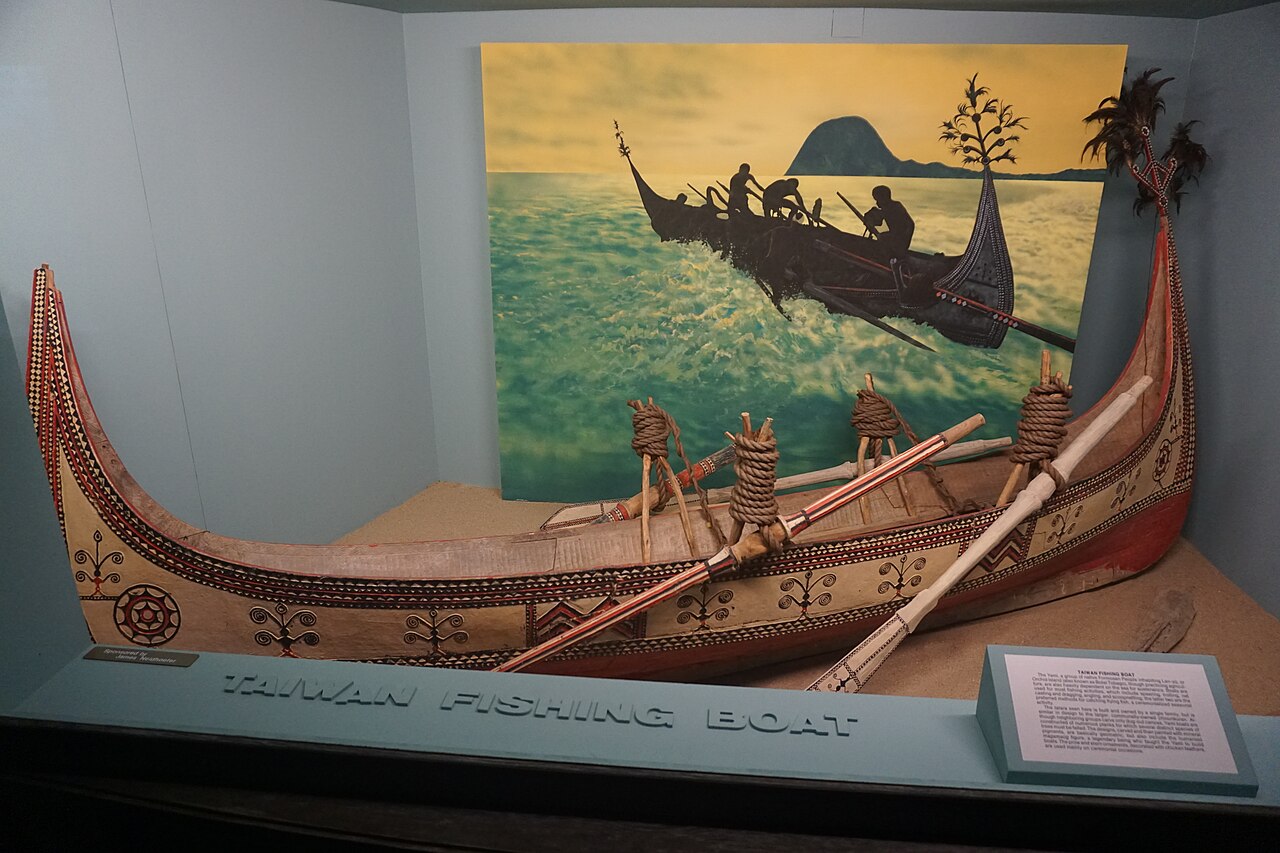
All the views and opinions expressed are those of the author. Image Credit: Michael Barera.
About the Author

Raghav Sharma is an independent researcher with a keen interest in geopolitics, economic strategy and technological competition. He focuses on Indo-Pacific affairs and explores how industrial policy, trade and technological innovation shape national power in an increasingly complex and competitive global environment.