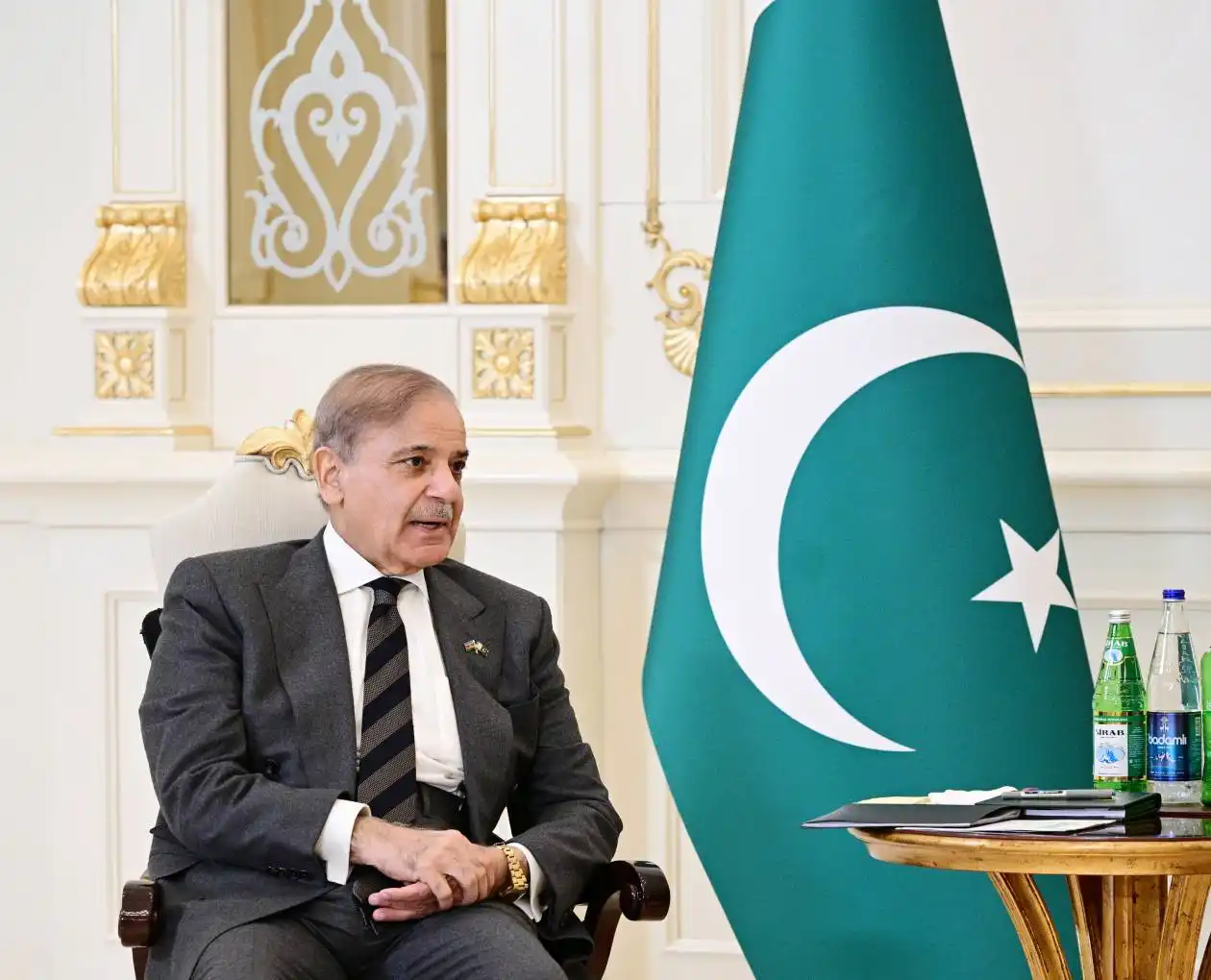
When the United States and Israel launched coordinated strikes against Iran on February 28, 2026, every country in the region was forced to pick a lane. Most found one, if only rhetorically. The Gulf states condemned Iran’s retaliatory missile barrages on their soil. China called for restraint and dispatched an envoy. Turkey blocked use of its airspace. India said nothing, and meant it. Pakistan could not afford to say nothing. And it could not afford to say something.
Within hours of Khamenei’s assassination being confirmed, Pakistan’s Ministry of Foreign Affairs issued a statement condemning the US-Israel strikes as “unwarranted” and then, in the same breath, condemned Iran’s retaliatory strikes on Gulf states as “blatant violations of sovereignty.” It was a geopolitical pirouette performed in the full glare of a crisis, and it satisfied no one. Angry Shia protesters were already massing outside the US consulate in Karachi. The Saudi foreign minister was reading the same statement in Riyadh. Washington was watching. Tehran was watching. Islamabad stood at the centre of it all, trying to face every direction at once.
This is Pakistan’s nightmare: a country fighting the Taliban on its Afghan border, managing an erupting Shia street in its own cities, bound by a mutual defence pact to a Gulf ally now under Iranian missile attack, economically dependent on a remittance corridor running through an active war-zone, and trying to sustain a carefully rebuilt relationship with Washington, all at the same time. It is not a balancing act. It is a trap.
As the Iran–Israel–US war reshapes the Middle East, Pakistan finds itself encircled — caught between a Shia street in revolt, a mutual defence pact with Saudi Arabia, an active Afghan border conflict, and an economy dependent on a Gulf corridor now at war.
The Shia Street Explodes
Within hours of Khamenei’s killing, protests erupted in Karachi, Islamabad, Lahore, Peshawar, Multan, Faisalabad, and the mountainous districts of Gilgit-Baltistan. By Sunday March 1, at least 24 people had been killed nationwide in clashes between security forces and demonstrators. In Karachi, protesters stormed the US consulate, smashing windows and attempting to set the building ablaze; police fired live rounds, killing 10 people and injuring more than 60. In Skardu, thousands of Shia demonstrators who form a demographic majority in Gilgit-Baltistan torched the offices of the United Nations Military Observer Group and the UNDP. By Monday morning, the Pakistani Army had been deployed and a three-day curfew imposed across Gilgit, Skardu, and Shigar districts.
Pakistan’s Shia community constitutes roughly 15 to 20 percent of the country’s 250 million people between 40 and 50 million individuals. They are not a fringe. They are dispersed across every major city, concentrated in pockets like Gilgit-Baltistan, Parachinar in Khyber Pakhtunkhwa, and Karachi’s core neighbourhoods. They have historically mobilised around Iran and the Iran they are mobilising around now is one whose supreme religious authority was killed by American bombs.
The anger on the streets is not simply about Khamenei. It is the cumulative grievance of a minority that has endured decades of anti-Shia sectarian violence from Sunni extremist groups, that has watched the Pakistani state manage rather than resolve their security, and that now sees their government issue a statement condemning Khamenei’s murder and Iranian missiles in the same paragraph. Senate Allama Raja Nasir Abbas, head of the major Shia political party Majlis Wahdat-e-Muslimeen, publicly demanded an “explicit condemnation” of the United States and Israel and a formal affirmation of “Iran’s right to defend its sovereignty.” Instead, Islamabad offered balance.
Running beneath this street-level fury is a deeper structural risk: the Zainabiyoun Brigade. This IRGC-backed Pakistani Shia militia composed of fighters recruited from across Pakistan, particularly from Parachinar, Karachi, Quetta, and Gilgit-Baltistan was banned by Islamabad in April 2024 after intelligence assessments identified it as a threat to national security. On March 6, Pakistan’s police announced the arrest of two suspected Zainabiyoun members in Karachi, with raids continuing. The DIG acknowledged that the network was being “systematically dismantled” but also confirmed it continued to operate. With Iran at war and its IRGC infrastructure under attack, the question of whether Tehran activates its Pakistani proxy networks is not hypothetical. It is urgent.
The Pact that was Never Supposed to be Tested
Pakistan and Saudi Arabia have a mutual defence agreement that stipulates an attack on one is effectively an attack on both. When Iran launched retaliatory missiles and drones at Saudi Arabia, Bahrain, Jordan, Kuwait, Qatar, and the UAE, that pact was no longer theoretical. Deputy Prime Minister and Foreign Minister Ishaq Dar, who happened to be in Riyadh at an Organisation of Islamic Cooperation meeting when the conflict began, launched what he later described as “shuttle communication” between Tehran and Riyadh.
In a Senate address and press conference on March 3, Dar disclosed that he had personally reminded Iran’s Foreign Minister Abbas Araghchi of Pakistan’s defence obligations to Saudi Arabia. “We have a defence pact with Saudi Arabia, and the whole world knows about it,” Dar said. “I told the Iranian leadership to take care of our pact with Saudi Arabia.” This was not diplomatic courtesy. It was a warning: if the conflict escalates further and Riyadh formally invokes the pact, Pakistan may be legally obligated to respond militarily against a neighbour with which it shares a 900-kilometre border and whose Shia population has tens of millions of religious kin inside Pakistan. The contradiction would be total: Pakistan fighting, on behalf of Sunni-led Saudi Arabia, against a Shia Iran whose mourners are already dying in Karachi’s streets.
There is precedent for restraint. In 2015, Pakistan’s parliament passed a resolution refusing to join the Saudi-led military coalition in Yemen, citing the need for neutrality. But analysts note the current geometry is sharper. Iran has already struck Saudi soil. The pact’s language is active. Pakistan has rebuilt its Washington relationship at significant political cost, making it harder to resist US pressure in a sustained conflict. As Islamabad-based historian Ilhan Niaz told Al Jazeera, if Saudi Arabia feels sufficiently threatened and formally requests Pakistani military assistance, “Pakistan will come to Saudi Arabia’s aid. To do otherwise would undermine Pakistan’s credibility.”
The question is not whether Pakistan will send ground troops to fight Iran which almost certainly it will not. The question is whether Islamabad can maintain the fiction of neutrality if Iranian missiles continue landing on Saudi soil, and Riyadh determines it needs more than Pakistani diplomatic shuttles.
The Afghan Border: A Two-Front War Becomes Real
Pakistan’s strategic nightmare is compounded by a fact that barely registers in international coverage: the country is simultaneously fighting on its western frontier against the Afghan Taliban. When Iran struck, Pakistan was already engaged in active cross-border military operations after Afghanistan launched attacks in retaliation for Pakistani airstrikes the previous week. By the time Islamabad deployed troops to Gilgit-Baltistan to contain Shia protests, it was managing live military engagements on two separate borders.
This is the two-front contingency Pakistan has always feared and structured its military doctrine to avoid. Its strategic culture, defence budget, and command architecture are oriented overwhelmingly towards India. Fighting an active Afghan contingency while managing western instability and domestic unrest simultaneously was never supposed to happen. It is happening now. Pakistan’s entire western frontier is, as The Diplomat have described it, “extremely volatile” while on the eastern border with India, an uneasy and tenuous calm holds following the May 2025 four-day conflict.
Economic Floor is Falling
Beneath the security calculus lies an economic vulnerability that may be more immediately destabilising than any of the military pressures. Pakistan receives more than $30 billion annually in workers’ remittances; of the $23.2 billion received in the first seven months of fiscal year 2026 (July 2025 – January 2026), over $10.88 billion nearly 47 percent originated from Gulf countries. Saudi Arabia and the UAE alone contributed over $8.6 billion in that period. More than 4.7 million Pakistani citizens work in the Gulf. These remittances are not a supplementary income stream. They are the primary mechanism by which millions of Pakistani households sustain themselves and the backbone of Pakistan’s foreign exchange reserves at a moment when those reserves remain fragile.
Iran’s closure of the Strait of Hormuz has simultaneously disrupted the corridor through which Pakistan sources the bulk of its petroleum imports. Pakistan imports approximately 300,000 barrels of crude oil per day against domestic production of around 70,000 barrels, a gap that has been widening as indigenous reserves deplete. Annual petroleum import costs stand at $15 to $16 billion. Analysts at Topline Securities estimate that a 10 percent rise in global oil prices adds $1.5 to $1.6 billion to the import bill alone.
When remittance disruption, higher oil costs, export losses, and elevated shipping insurance premiums are combined, Pakistan’s total monthly economic exposure has been estimated at up to $3 billion, a number that would place immediate pressure on its rupee, accelerate inflation, and risk triggering a balance-of-payments crisis in a country still operating under an IMF stabilisation programme.
The KSE-100 index recorded its largest single-day fall in history on Monday March 2, plunging 16,089 points. A partial recovery followed only after Pakistan’s petroleum minister sought Saudi Arabia’s assistance in securing oil supplies through the Red Sea port of Yanbu, a workaround that itself depends on the Saudi goodwill that Pakistan’s foreign policy is simultaneously straining. Islamabad has begun discussing emergency austerity measures: work-from-home orders, online schooling, weekly fuel price reviews. These are the instruments of scarcity management, not strategic choice.
The Limits of Strategic Ambiguity
Pakistan’s government has framed its position as one requiring “diplomatic neutrality and astute strategic awareness.” The reality is simpler and starker: every exit from this crisis extracts a cost Pakistan cannot afford to pay. Abandoning neutrality to back Saudi Arabia risks igniting the Shia street and destabilising an already volatile Balochistan, the same province that borders Iran and has hosted proxy activity for years. Tilting toward Tehran destroys the rebuilt relationship with Washington and jeopardises the IMF tranche on which fiscal survival depends. Doing nothing while the economy bleeds means choosing only the timing of the next crisis, not its prevention.
The 2015 Yemen precedent offered Pakistan a parliamentary shield, a resolution that allowed the civilian government to refuse Saudi demands without directly confronting Riyadh. But the scale, speed, and proximity of this conflict leave far less room than 2015. The Iranian border is already porous. The Shia street is already bleeding. The defence pact has already been verbally activated. The Afghan front is already open. And Pakistan’s economic cushion which is never generous is being depleted in real time by a war it did not choose and cannot control.
Pakistan has historically survived by making its indispensability to every major power like the United States, China, Saudi Arabia, even Iran; more valuable than its strategic incoherence. That calculus works in peacetime, or in managed crises that evolve slowly enough for Islamabad to hedge. What Pakistan is facing today is not a managed crisis. It is a simultaneous detonation of every fault line the country has spent decades papering over: sectarian, economic, geographic, and geopolitical. The question is no longer whether Pakistan can stay neutral. It is whether the architecture of the Pakistani state is robust enough to absorb the shocks of a war it has no exit from and no strategy for surviving intact.
Featured Image Credit: President.az
About the Author
Anirudh Phadke is the Founder, Publisher & Editor of The Viyug. He previously worked for International Criminal Police Organization (INTERPOL). He was also a Member of the Board of Studies (BoS) for the Department of Defence & Strategic Studies at the Guru Nanak College (Autonomous). Anirudh holds a Master of Science in Strategic Studies along with a Certificate in Terrorism Studies from S. Rajaratnam School of International Studies (RSIS) at Nanyang Technological University (NTU). He completed Bachelor’s degree in Defence & Strategic Studies from Guru Nanak College (Autonomous).
17 thoughts on “The Four Fault Lines the Iran War just Cracked Open in Pakistan”