On Wednesday, January 14, 2026, high-level talks between the Trump administration and Danish-Greenlandic officials ended precisely where they began: in deadlock. Following a White House meeting with Vice President JD Vance and Secretary of State Marco Rubio, Danish Foreign Minister Lars Lokke Rasmussen emerged to confirm a “fundamental disagreement” remained over Greenland, despite establishing a working group to explore compromise. Hours earlier, President Trump had doubled down from the Oval Office, declaring “we need Greenland for national security” while questioning whether “Denmark can do about it if Russia or China wants to occupy Greenland.”
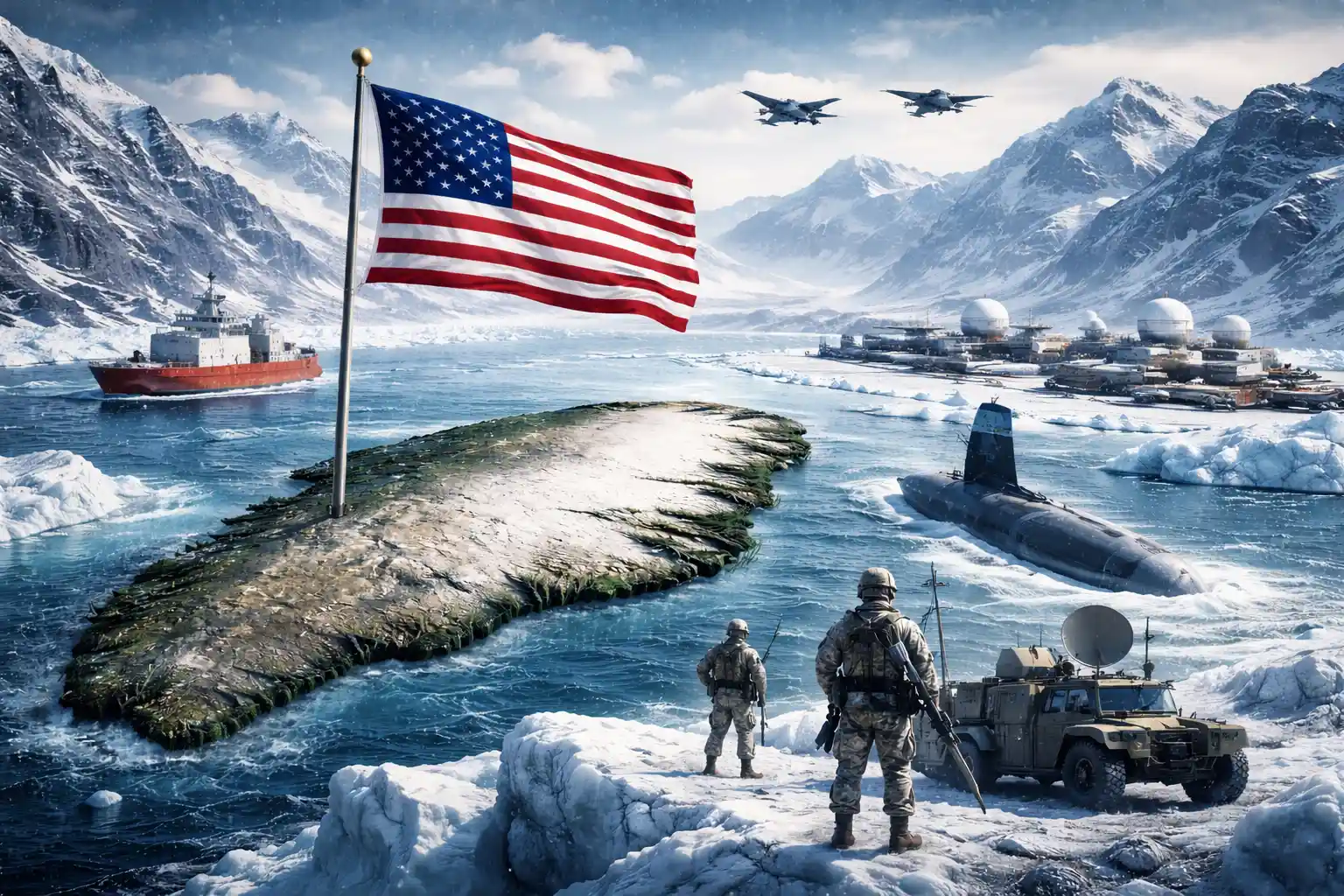
Even as Denmark announced immediate military reinforcements to the Arctic, deploying “an increased military presence of aircraft, ships and soldiers, including from other NATO allies”, Trump’s position hardened rather than softened. This clash reveals how melting Arctic ice is transforming a Danish territory into the world’s most contested strategic real estate.
Geopolitical Stakes: The Resource Doctrine
Trump’s pursuit of Greenland rests on three interlocking strategic calculations, each amplified by climate change. First and most tangible is the island’s staggering mineral wealth. Greenland ranks eighth in the world for rare earth reserves, with 1.5 million tons, and is home to two rare earth deposits among the largest globally named Kvanefjeld and Tanbreez. The territory holds between 36 and 42 million metric tons of rare earth oxides, making it the second-largest reserve after China.
More critically, 25 of the 34 minerals deemed “critical raw materials” by the European Commission were found in Greenland in a 2023 survey. These materials power everything from electric vehicle motors to advanced weapons systems, and the United States is 100 percent reliant on imports for 12 minerals deemed critical for the economy and national security. Yet accessing these resources presents formidable challenges. Mining experts describe the enterprise as bordering on “science fiction.” Approximately 80% of Greenland is covered with ice, and mineral extraction in the Arctic can be five to 10 times more expensive than elsewhere on the planet.
Current projects remain far away from actually building a mine and would still need to raise at least hundreds of millions of dollars. More damagingly, even successfully mined rare earths would require processing in China, undermining the entire national security rationale. Industry analysts warn the approach is “absurd”, with one Arctic specialist declaring “you might as well mine on the moon”
The second calculation involves emerging Arctic shipping routes. Melting Arctic sea ice has created more opportunity to use northern shipping routes i.e. allowing logistics companies to save millions of dollars in fuel by taking much shorter paths between Asia and Western Europe and the United States.
The Northwest Passage, which runs close to Greenland’s coastal waters, could reduce the distance from Japan to Europe to only about 10 days compared to roughly 22 days via the Suez Canal. As sea ice retreats, NOAA modelling predicts that by 2059, it will likely be possible for a polar-class vessel to sail right across the North Pole as ice formation diminishes further. Control of Greenland would position the United States to dominate these emerging corridors as climate change accelerates.
Third is Greenland’s position straddling the GIUK gap i.e. the maritime passage between Greenland, Iceland, and the United Kingdom that links the Arctic to the Atlantic. The island hosts Pituffik Space Base, a Cold War-era installation vital for missile detection and satellite surveillance. Trump’s advisers frame expansion as essential to counter Russian and Chinese activities, though NATO allies question why Washington needs full control over Greenland to defend itself when existing defence agreements already grant extensive access.
The comparison to Venezuela’s recent “liberation” operation looms large. Just days after U.S. forces extracted President Nicolás Maduro from Caracas on January 4, Trump explicitly linked the two situations, stating he would acquire Greenland “whether they like it or not” and threatening to do it “the hard way” if necessary. The juxtaposition suggests an emerging “strategic extraction” doctrine where American national security interests justify unilateral action to secure critical resources and territory, regardless of sovereignty concerns or alliance obligations.
Denmark and Greenland have rejected this framing entirely. Greenland’s Foreign Minister Vivian Motzfeldt stressed “how important it is from our side to strengthen our cooperation with the United States” but added firmly “that doesn’t mean that we want to be owned by the United States”. Prime Minister Jens-Frederik Nielsen issued blunt warnings: If Greenland must choose between the U.S. and Denmark, “we choose Denmark”. The Indigenous Inuit population of 57,000 overwhelmingly opposes American control, with just 6% favouring Greenland becoming part of the United States while 85% reject the idea.
Legal and Sovereignty Dimensions: The Charter under Siege
Trump’s threats place the United States in direct violation of foundational international law. UN Charter Article 2(4) prohibits not just the use of force, but the threat of force against any state’s territorial integrity. When the President declares military options remain “on the table” regarding Danish territory, he violates the cornerstone principle of the post-1945 international order. International law prohibits the acquisition of territory through force or the threat of force, a norm considered jus cogens i.e a peremptory principle from which no derogation is permitted.
The prohibition extends beyond military action. When tariffs are explicitly threatened as leverage to force territorial concessions, the combined effect of military rhetoric plus economic pressure creates a coercion package that implicates multiple international law violations. Trump’s reported consideration of imposing punitive tariffs on Denmark unless it cedes Greenland would constitute economic coercion aimed at territorial change i.e. itself a violation of the UN Charter’s prohibition on intervention in domestic affairs under Article 2(7).
The self-determination principle compounds these violations. The right of self-determination would be violated if Denmark ceded Greenland to the United States without popular support in Greenland in favour of such a transfer, even through peaceful negotiation. Under the 2009 Self-Government Act, Greenland holds what amounts to a veto over fundamental changes to its political status through its self-government institutions. Danish Prime Minister Mette Frederiksen correctly emphasised that “Greenland belongs to the Greenlanders”—the territory cannot be ceded without popular consent.
Yet Greenland’s legal architecture was designed for a binary choice: deeper integration with Denmark or eventual independence. Transfer to a third sovereign power simply does not appear in the constitutional framework, raising the question of whether such a transfer falls outside the legally permissible exercises of self-determination under Danish law. This creates profound uncertainty about whether Greenland could legally choose American sovereignty even if a majority wished it—which polling shows they emphatically do not.
Precedents from recent territorial disputes cast an ominous shadow. Russia’s 2014 annexation of Crimea following a contested referendum violated the same principles Trump now threatens to breach. China’s construction of artificial islands and military installations in the South China Sea, despite adverse rulings from the Permanent Court of Arbitration, demonstrated how powerful states can defy international law when enforcement mechanisms prove toothless. The International Court of Justice can issue rulings, but there’s no way to enforce an ICJ ruling—a reality that emboldens great powers to act unilaterally.
NATO Article 5 creates a particularly acute dilemma. Any military action against Greenland would legally constitute an armed attack on Denmark, triggering the collective defence obligation of all NATO members, including the United States. Trump would be declaring war on his own alliance. European leaders responded with unprecedented unity, with France, Germany, Italy, Poland, Spain, Britain and Denmark issuing a joint statement affirming that only Greenland and Denmark can decide their relationship.
French President Emmanuel Macron warned the knock-on effects of the U.S. trying to seize Greenland would be “unprecedented”, while several European nations began deploying troops to Greenland in shows of solidarity. Denmark simultaneously announced dramatic military escalation. Defense Minister Troels Lund Poulsen announced increased “military presence and exercise activity” in the Arctic and North Atlantic “in close cooperation with our allies”, stating this was necessary in a security environment where “no one can predict what will happen tomorrow”. Sweden, Norway, and Germany rapidly committed forces to Greenland following Denmark’s request—a remarkable mobilisation among NATO allies against implied American aggression.
Economic Leverage Tactics: The Price of Sovereignty
Trump administration officials have explored multiple coercive economic strategies to achieve acquisition without conventional purchase. Most controversially, U.S. officials have discussed sending lump sum payments to Greenlanders, with figures ranging from $10,000 to $100,000 per person according to multiple sources. At the upper range, this would cost approximately $5.7 billion for Greenland’s 57,000 residents i.e. less than 1% of the Pentagon’s annual budget. The payments would theoretically incentivise Greenlanders to vote for independence from Denmark, potentially followed by integration with the United States or a Compact of Free Association (COFA) agreement.
Such compacts exist with Pacific island nations like Palau and the Marshall Islands, where the U.S. government typically provides essential services such as mail delivery and military protection, while the U.S. military operates freely and trade is largely duty-free. However, COFAs have only been concluded with independent nations, requiring Greenland first to separate from Denmark.
Greenlandic lawmakers reacted with fury to the cash proposal. Aaja Chemnitz, a Greenland representative in Denmark’s parliament, declared “No amount of money can buy our national soul. It’s disrespectful to think that you can buy a people”. She warned that Greenland’s culture, identity, and language would be “completely eroded over a very short period of time” under U.S. control. Another lawmaker, Aki-Matilda Hoegh-Dam, emphasized: “We are not a commodity to be traded as human beings. No matter how much money one might offer, it would still be too cheap. It is just as much about dignity.”
Beyond direct payments, the administration reportedly considered broader purchase negotiations. Estimates suggest the United States could have to pay as much as $700 billion to achieve acquisition i.e. more than half the Defense Department’s annual budget. This figure accounts not just for territorial transfer but for assuming Greenland’s governance costs, infrastructure development, and welfare obligations currently shouldered by Denmark at approximately $1 billion annually.
Trade coercion represents another lever. Trump’s history of weaponising tariffs suggests Denmark could face punitive economic measures designed to force territorial concessions. Such pressure would combine with military threats to create what legal scholars describe as a comprehensive coercion package violating multiple international law principles.
The United States has also moved to block Chinese access to Greenland’s resources. U.S. officials extensively lobbied the Tanbreez developer to prevent the sale of the deposit to a Chinese buyer, with Tanbreez Mining selling the deposit to New York-based Critical Metals Corp for reportedly less than earlier offers from Chinese firms. Meanwhile, Chinese rare earth company Shenghe Resources is the second largest shareholder in the Kvanefjeld mine with a memorandum of understanding signed in 2018 to lead processing and marketing of materials.
This creates a paradoxical situation: the U.S. seeks to acquire Greenland partly to deny China access to critical minerals, yet any mined materials would still require processing in China given current global supply chains. Greenland’s minister of business and mineral resources warned that without an influx of Western investment, Greenland will have to turn to other partners, including China. American aggression may thus accomplish the opposite of its stated goal, pushing Greenland toward precisely the Chinese partnership Trump claims to prevent.
The New Arctic Disorder
The Greenland crisis marks a potential inflection point for 21st-century international order. Three scenarios emerge, each with profound implications for small nations caught between competing superpowers.
Scenario One – Diplomatic Compromise
This involves Trump administration officials and Denmark’s working group negotiating enhanced security cooperation, expanded U.S. military basing rights, and American investment in Greenland’s critical mineral development i.e. all without territorial transfer. This preserves Danish sovereignty while addressing legitimate security concerns.
Both Lokke Rasmussen and Motzfeldt offered measured hope that talks would lead to Trump dropping his demand and creating a path for tighter cooperation. However, Trump’s track record of viewing compromise as weakness makes this outcome uncertain at best.
Scenario Two – Military Escalation
Escalation could unfold if Trump orders operations ranging from expanded Pituffik Base construction without Danish consent to outright seizure of strategic locations. The United States already operates Pituffik Space Base under a 1951 defense agreement and retains unmatched airlift, satellite coverage, and surveillance in the High North.
Denmark’s Arctic forces were never meant to deter a major power. While European NATO allies might conduct symbolic exercises, they would not block movement given the overwhelming U.S. military advantage. Such action would fracture NATO, likely terminate the alliance, and establish precedent for territorial revision through force that Russia and China would immediately exploit elsewhere.
Scenario Three – Catalysed Independence
This scenario sees Greenland’s political establishment, traumatised by American pressure, accelerate pursuit of full sovereignty separate from both Denmark and potential U.S. control. While polls show an overwhelming majority of Greenlanders want independence, concerns about the economic costs of separating from Denmark have kept most legislators from calling for an independence referendum. Trump’s threats might paradoxically strengthen the independence movement while hardening resistance to American alignment i.e. leaving an independent but economically vulnerable Greenland potentially more susceptible to Chinese infrastructure investment and mineral rights purchases.
The broader implications transcend the Arctic. Other states are watching as the U.S. openly pursues foreign intervention, regime change, and the use of force, bypassing multilateral institutions. Russia has already cited Western inconsistencies to justify its territorial aggression. China stands to benefit from this erosion, having long dismissed legal judgments as politicised. Regional powers from India to Israel may interpret weakened norms against unilateral action as license to pursue their own territorial ambitions framed as security imperatives.
For Small Nations, the Lessons is Stark
Sovereignty becomes contingent when great powers invoke national security. The international legal order proved unable to reverse Russia’s Crimea annexation, China’s South China Sea militarisation, or prevent the U.S. invasion of Iraq. Greenland now tests whether even NATO allies can withstand coercion from the alliance hegemon. If a wealthy democracy embedded within European security structures cannot maintain territorial integrity against American pressure, what hope remains for less protected states?
The Arctic itself faces transformation from a region of “high North, low tension” cooperation to one of competition over resources, particularly rare earth metals and control of shipping lanes increasingly accessible as sea ice melts. The cooperative spirit that once defined Arctic governance has been replaced by emerging conflict as the United States, Russia, and China all seek to project power in the region.
Trump’s Greenland gambit reveals how climate change itself becomes a strategic accelerant i.e. melting ice doesn’t just expose resources and shipping lanes, it dissolves the geopolitical constraints that previously protected peripheral territories from great power predation. In this emerging order, a territory’s strategic value may outweigh its people’s autonomy, alliance commitments may prove negotiable, and international law may revert from universal principle to mere rhetoric. The question facing Greenland’s 57,000 residents, and ultimately all small nations, is whether the world will accept this regression or muster the collective will to enforce sovereignty as more than a privilege of the powerful.
All the views and opinions expressed are those of the author. Image Credit: The Viyug.
About the Author
Mansi Suryavanshi is a research consultant for The Viyug. She has developed expertise in paralegal services and research work related to judgements for assisting legal work. She previously worked as an assistant professor at the Department of Physics in PG College.