Sudan and South Sudan are close to a dangerous regional crisis. However, their conflicts are not combining into one big regional civil war because their internal issues are very different and do not easily connect. Sudan’s war, which has lasted over 1,000 days since April 2023, involves the Sudanese Armed Forces, led by Abdel Fattah al-Burhan, fighting against the Rapid Support Forces, led by Mohamed Hamdan Dagalo (Hemedti). This is a harsh battle for control of the country, driven by personal goals, money from gold mines in Darfur, and support from other countries.
This split at the top, caused by a failed power-sharing agreement after Omar al-Bashir, has devastated Khartoum, made Darfur an RSF stronghold, and displaced over 13 million people, creating the worst humanitarian disaster in Africa. On the other hand, South Sudan is struggling with many ethnic divisions. President Salva Kiir’s Dinka-dominated SSPDF is fighting against Riek Machar’s Nuer SPLM-IO and many militias from the Equatoria region.
They are all competing for oil money while the country faces a financial crisis due to pipeline problems caused by the chaos in Sudan. According to Political analysts, these situations are not the same and will not merge. Sudan’s conflict is a fight between military leaders for control of the government, while South Sudan’s is descending into local warlordism. Therefore, calling it a “regional civil war” is more of an exaggeration than a reality.
The effects of the conflicts spreading are clear, but they worsen existing crises instead of creating one unified war. Large numbers of refugees, with over 700,000 Sudanese entering South Sudan’s border areas, are causing resource shortages in Equatoria camps. This puts a strain on Juba’s limited resources and encourages local militias to see the newcomers as enemies in their conflicts against the Dinka people. Economic connections, like South Sudan’s 98% drop in oil exports due to damaged pipelines to Port Sudan, are causing both countries to suffer financially.
This promotes black-market smuggling, which provides weapons to both RSF cattle raiders and SPLM-IO holdouts, but does not unite them. Abyei, a disputed oil-rich area, shows this tension. RSF militias are probing from the north, SAF drones are flying from Khartoum, and Ngok Dinka people loyal to Kiir are occasionally fighting. However, Juba’s need for oil forces is to remain neutral to avoid a complete cutoff. Influence from other groups extends further, with Abdelaziz al-Hilu’s SPLM-North attacking towns in Kordofan with South Sudanese fighters, and Chadian Arabs joining the RSF for grazing rights. However, these are isolated incidents, not a major unification, as ethnic loyalties and logistical challenges keep the armies separate.
External actors are heavily involved, but their efforts are scattered and do not combine the violence. The UAE is sending drones and money-laundering services to Hemedti’s RSF to secure access to the Red Sea against Egypt. Egypt is arming Burhan’s SAF with Turkish Bayraktars to protect the Nile headwaters. Russia’s Wagner remnants (now called Africa Corps) are searching for RSF gold concessions near the CAR borders, while Khalifa Haftar’s Libyan supplies are flowing eastward, disguised as humanitarian aid.
Ethiopia is sharing intelligence with the SAF on the Fashaga disputes, focusing more on Eritrean threats than Juba’s problems. Uganda’s Museveni is quietly deploying troops to support Kiir against Machar, but is avoiding involvement in Sudan to prevent issues with TPLF exiles. This involvement from other countries is similar to the Gulf cold war in Yemen or the aftermath of NATO in Libya, causing escalation but not unification. No alliances are forming because the backers are focused on their own benefits rather than a widespread conflict in the Horn of Africa. IGAD’s ineffective meetings in Addis and Juba, intended for mediation, are mainly photo opportunities for leaders who are afraid of refugee crises and the rise of jihadist groups like ISIS-SA or al-Shabaab.
Pessimists who predict a regional conflict point to the logic of contagion: Sudan’s famine, affecting 25 million people by late 2025, could lead to hyperinflation in South Sudan, creating youth militias that fight across borders in White Nile clashes. If the RSF fully controls El Fasher and advances to the center of Abyei, SSPDF retaliation could spread to Ethiopia’s Gambella refugee wars. Economic collapse unites them, as Darfur gold funds RSF arms that are supplied to NAS rebels in Equatoria, while Sudan’s livestock raids resemble South Sudan’s 2024 Pibor massacres, creating a “war economy arc” from Tripoli to Addis.
Geopolitics intensifies this, with Gulf states competing for the Red Sea, encouraging bolder proxy actions, and major powers neglecting the situation (US focusing inward under a potential Trump 2.0, China being cautious with its Belt and Road Initiative), leaving the AU/UNSC powerless due to Russian and Egyptian vetoes. However, this overstates the synergy. Sudan’s ongoing stalemate, with the SAF retaking areas of Khartoum by January 2026 and the RSF holding their ground in Geneina, is draining resources without creating spillover momentum, as Juba’s Kiir is prioritising the 2026 elections over Burhan’s requests.
Optimists, or realists, argue that incompatibility is a major factor: Sudan’s conflict is centred in Khartoum, with Hemedti’s diverse paramilitary forces (Darfuri Arabs, Libyan mercenaries) clashing with Burhan’s Islamist officers, which is very different from Juba’s tribal politics where Dinka patronage is more important than ideology. South Sudan lacks Sudan’s resource wealth. Its oil is mortgaged to China, and revenues are given to warlords, not state armies, which dooms it to internal conflict rather than cross-border jihad. Regional actors, who have learned from Somalia and Tigray, are choosing containment.
Chad’s Déby is sealing the Darfur borders, not invading, and Egypt is sending aid without troops, fearing RSF influence on Sinai. No rebel alliance is emerging, as al-Hilu’s SPLM-N avoids Machar’s IO, and the RSF’s genocidal actions against the Masalit people alienate Nuer relatives. The vast Sahel region and the lack of rail or road connections enforce isolation. Humanitarian blockades and WHO-documented attacks on over 201 hospitals are forcing fighters to focus on survival rather than expansion.
Political analysts have very different views on this situation, enriching the discussion with insights from key figures. Kholood Khair of Confluence Advisory warns that the RSF-SPLM-N al-Hilu agreement in South Kordofan is a practical partnership that could lead to smuggling from South Sudan and worsen the regional conflict. Harry Verhoeven, a Sudan expert, warns in an Al Jazeera article that Sudan’s war is creating new alliances with South Sudanese groups, which could give the RSF more room to operate if Juba returns to full conflict. Corina Linder of the Horn Institute says that Sudan’s situation is a “deepening abyss” because rival RSF-SPLM-N administrations are dividing the country, which is worsened by outside arms races, but without a true merger with South Sudan.
Foreign Policy analysts are concerned that recent captures by the SAF of South Sudanese fighters suggest Juba is becoming more involved in Sudan’s civil war, increasing the risk of clashes over oil and borders. The Soufan Center stresses the dangers of the conflict spreading, saying that the ethnic cleansing in Darfur is destabilising neighbouring countries, requiring urgent border stabilisation instead of focusing on exaggerated war stories. Researchers at the Rift Valley Institute believe that the risk of the conflict fully regionalising through Chad and Libya is low to medium because IGAD’s cautious approach is limiting the worst spillovers.
Global R2P advocates say that Sudan’s war is causing repeated violence in South Sudan through the exploitation of ethnic divisions by elites, but is not uniting them. Experts at Amani Africa observe that Kiir’s handling of Machar’s detention has increased clashes in Equatoria, with Sudan making Juba’s peace process failures worse instead of better. These views agree on the threats of the conflict spreading while disagreeing on whether a merger is likely, highlighting the need for focused diplomacy.
Beneath the visible chaos, there are underlying currents showing clear separation across different levels of society and strategy. Sudan’s SAF is seeking support from moderate Persian Gulf countries like Saudi Arabia and Qatar for new Jeddah Track talks, intentionally excluding the RSF’s closer ties with the UAE to isolate Hemedti diplomatically. At the same time, Juba is using Sudanese exile networks to gain useful intelligence, positioning itself as a reliable IGAD mediator to unlock its own frozen international assets. Climate issues are worsening the divide.
The drying up of the Nile, sped up by Ethiopia’s filling of the GERD, and widespread desertification are causing conflicts between herders and farmers, creating shared suffering across borders but causing different responses, with the RSF acting as eco-marauding raiders and the SAF strengthening defenses around key dams. The youth population, with over 70% under 30 in both countries, is leading to widespread despair and the risk of radicalisation.
However, urban protests from Omdurman’s slums to Juba’s streets are increasingly demanding food and accountability instead of endless fighting, steadily reducing the number of frontline combatants through desertions and draft riots. Women’s networks are proving to be a quiet counterforce, from Darfur IDP councils organising secret aid to Equatorian peace mothers bridging ethnic divides, creating cross-border advocacy that international mediators are increasingly using to slow militarisation and build small-scale ceasefires.
Geopolitically, the countries’ struggles are reshaping the Horn of Africa’s political landscape, with significant implications for global powers. Sudan’s prolonged war is undermining already fragile GERD negotiations, putting upstream Ethiopia against downstream Egypt and Sudan in indirect proxy conflicts that reflect long-standing warnings from analysts about the dangers of division. South Sudan’s potential collapse is inviting opportunistic Russian gold grabs similar to those in CAR, while the UAE’s growing port dominance is putting pressure on China’s strategic base in Djibouti, amid increasing calls for financial sanctions on arms flows.
India, with major Nile water projects and a diaspora of around 5,000 people, is increasingly worried about terror pipelines coming from sprawling refugee camps, similar to Dadaab, that are swelling due to cross-border displacements. Europe remains focused on migration surges flowing through Libya-Haftar routes into Italy, as UN agencies report nearly 500,000 new IDPs in South Sudan alone by late 2025. BRICS countries like Brazil and South Africa are considering large agricultural investments in the famine-stricken areas, but jihadist groups such as IS-Sahel and al-Shabaab are ruthlessly exploiting governance gaps, demanding strong counter-terror agreements that analysts say must come before any election timelines. Security Council Report briefings highlight ongoing UNSC paralysis, with experts pushing for the deployment of Necessary Unified Forces in Juba to effectively prevent Sudan’s problems from spreading.
In the long term, demographic challenges combined with resource scarcity suggest ongoing instability rather than a sudden, explosive regional war. Sudan’s population of 50 million, with 40% urbanised youth facing the RSF’s revived Janjaweed tactics – considered genocidal by ADF investigators – mirrors the 2003 Darfur atrocities, but remains largely contained westward due to logistical issues. South Sudan’s 12 million people are dealing with devastating floods that have displaced 175,000 people, along with conflict-driven displacements of 321,000 people, according to OCHA data, which is fuelling pastoralist invasions into farmlands due to a lack of steady oil revenue.
Analysts from institutions like Chatham House agree that without enforceable agreements among elites, a “de facto partition” is likely in Sudan, along with a collapse of federalism in Juba, but the harsh geography makes any pan-regional command structure impossible. Gulf investors are shifting aggressively to more stable countries like Angola and Mozambique, abandoning the Horn and leaving reconstruction to AU-led initiatives that are struggling with funding shortages. Emerging non-state actors, from drone-smuggling cartels to cyber-radicalised youth groups, are further dividing the battlefield, turning potential unification into a collection of micro-threats.
Ending Note
From my point of view, what’s really happening is more than just war or peace. It’s a “spreading breakup.” Sudan’s collapse is causing South Sudan to split apart, but not into one big conflict. Instead, powerful people are choosing to focus on ways to make money and survive, instead of joining together in a way that would destroy them. This is in line with Khair’s and Verhoeven’s advice to be careful with alliances, rather than believing the more fearful ideas about a complete, disastrous merger. Good solutions depend on very specific, small agreements: a vote in Abyei overseen by UNMISS to finally stop the oil conflicts, sanctions from the US Treasury aimed at the UAE to cut off RSF’s gold income (as researchers in the Rift Valley suggest), and talks between SAF and RSF hosted by Juba, but kept separate from Kiir-Machar’s reconciliation, following IGAD’s updated plans.
Strengthen joint Chad-Libya border security to stop Haftar’s weapons from flowing in, restart the discontinued 2012 oil-sharing agreements from when South Sudan became independent with clear ways to check that it’s being done fairly, and encourage SPLM-N to remain neutral by giving them more self-government in Kordofan. Use women’s and youth groups to create widespread, local ceasefires, include climate-resilient aid routes under AU supervision, and stop proxy wars from getting worse before large numbers of young people lead to irreversible radical jihadism.
Without these careful actions, 2026 could bring two disasters: famine-related genocides in Sudan, based on worrying UN hunger numbers, and election riots in South Sudan because of R-ARCSS deadlines. These events could send shocks to Yemen’s Houthis, Somalia’s al-Shabaab areas, and even Sahel juntas because of the remaining Wagner gaps. However, these would appear as connected small fires rather than one single Armageddon. Policymakers should avoid the idea of a “regional war” that is exaggerated in opinion pieces, and instead choose specific, focused diplomacy that takes advantage of these divisions. The Horn of Africa’s future depends on this realism, not on broad, misleading stories of total destruction.
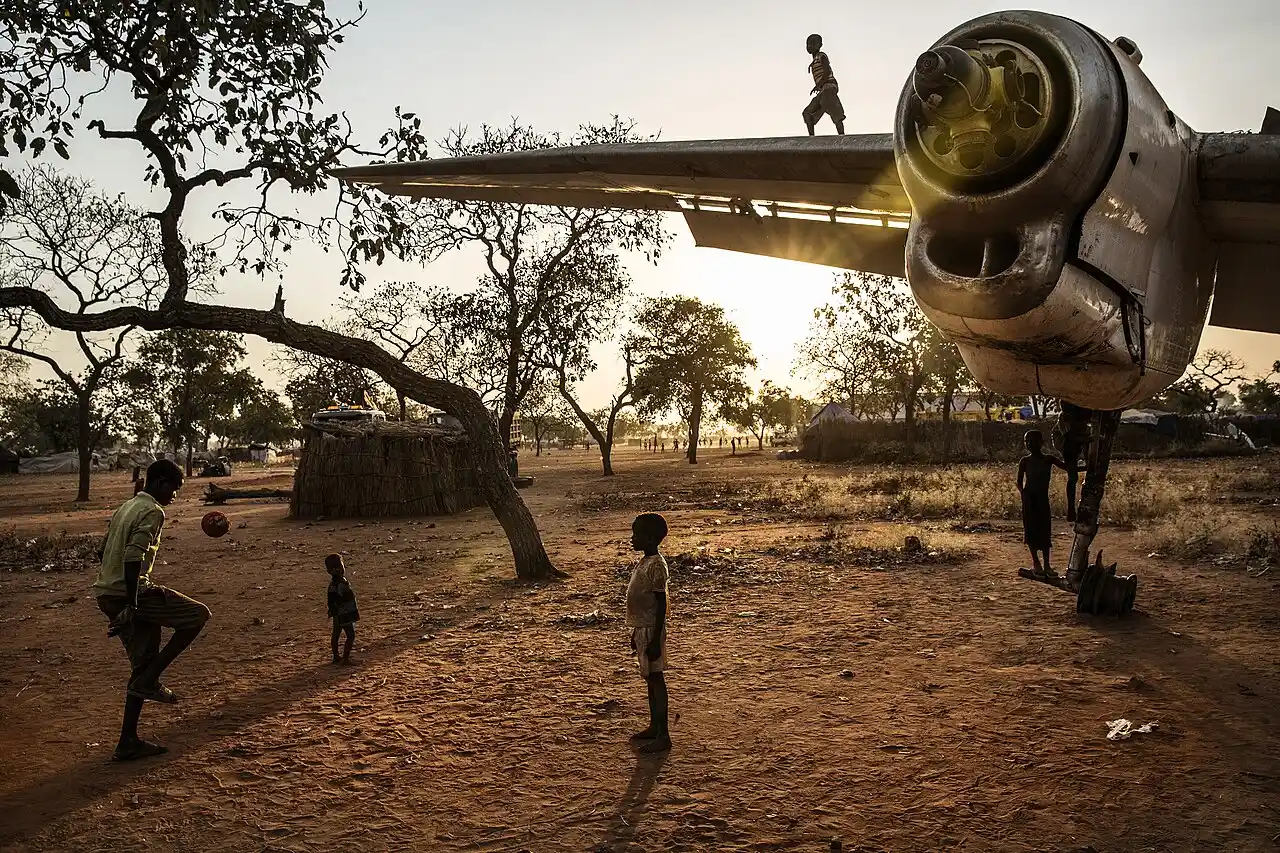
All the views and opinions expressed are those of the author. Image Credit: Marco Gualazzini.
About the Author
Harshit Tokas holds a Master’s degree in Political Science from the Indira Gandhi National Open University (IGNOU). He completed Bachelor’s degree in Political Science from Amity University. He is a columnist for The Viyug.