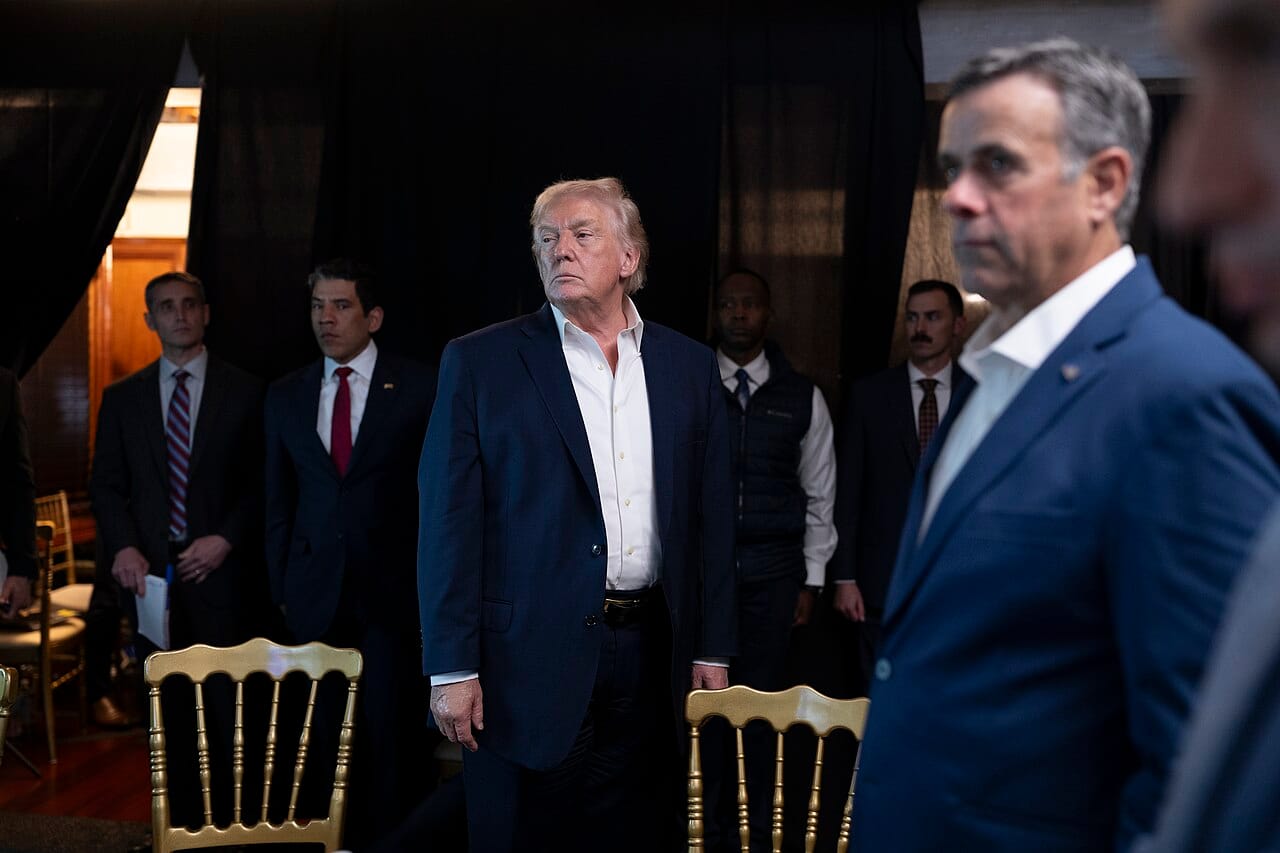
In the early hours of January 3, 2026, U.S. Special Forces carried out a daring raid in Caracas, capturing Venezuelan President Nicolás Maduro and his wife. This significant military operation involved over 150 aircraft neutralising Venezuelan air defences to extract the couple. It marked a major shift in U.S. foreign policy. The raid was not spontaneous; it was the result of a long-term effort by the U.S. to oust Maduro, an authoritarian leader accused of serious corruption and drug-related crimes. President Donald Trump defended the action by labelling Maduro a criminal instead of a statesman, stating that the U.S. would manage Venezuela to help with a government transition.
This unprecedented intervention raises an important question: what does capturing a sitting head of state mean for political order, international norms, and the definition of legitimate statehood?
The Anatomy of a Failed State: Venezuela’s Political and Economic Collapse
The U.S. operation was made possible by Venezuela’s severe internal decline. During Maduro’s 12-year rule, the once-wealthy petrostate experienced one of the worst economic collapses in modern history. Poor management, corruption, and unsustainable policies led to hyperinflation, wiping out wealth and pushing the population into extreme poverty. By 2024, a UN rapporteur reported that 82% of Venezuelans lived in poverty, with 53% experiencing extreme poverty and unable to afford basic food. This economic crisis caused a mass exodus of over 7.7 million people.
The state’s weakness extended beyond economics; it also involved institutional decay and crime. The Trump administration had long accused Maduro of turning the Venezuelan government into a criminal organisation. In 2020, the U.S. Justice Department indicted Maduro and top officials for having a drug-related partnership with Colombian guerrilla groups, allegedly using cocaine to flood the United States. These accusations provided the legal basis for action, with Washington offering a $50 million reward for Maduro’s capture.
At home, Maduro maintained his power through repression, jailing opponents and overseeing sham elections that faced widespread condemnation. By the time of the raid, many viewed Venezuela as not just a struggling country but a failed state whose leadership had corrupted its own institutions.
Other Related Articles Offering In-depth Perspectives
Redefining Legitimate Statehood: From Sovereignty to Criminality
The capture of Maduro sparked immediate debate over its legality. Critics, including the UN Secretary-General, questioned the raid’s legitimacy, viewing it as a violation of sovereignty similar to the 1989 invasion of Panama. Russia and China condemned it as an act of armed aggression. This perspective supports a long-standing principle of international law: a sitting head of state has immunity, and outside military intervention violates the UN Charter. However, the Trump administration presented a different doctrine.
It viewed the operation not as capturing a legitimate president but as apprehending a global drug lord. By framing Maduro as the leader of the “Cartel de los Soles,” the U.S. narrative shifted from state sovereignty to transnational crime. This change represents a process of state criminalisation, where a legitimate government is recast as a criminal syndicate. Once that label is applied, the protections of statehood vanish, and law enforcement tactics replace diplomatic ones.
“The conduct described in the Indictment wasn’t statecraft or service to the Venezuelan people. As alleged, the defendants betrayed the Venezuelan people and corrupted Venezuelan institutions to line their pockets with drug money.” — U.S. Justice Department indictment of Nicolás Maduro.
Thus, this intervention is less a bold precedent and more a reflection of ongoing institutional decay. It shows a world where weakening multilateral norms and increasing unilateral actions have become common. The raid did not create this new reality; it exploited the void left by failed diplomatic and institutional efforts to address a state that, according to its opponents, had lost its legitimacy.
Internal Drivers: The Domestic Calculus of a Regime-Change Operation
Although framed as foreign policy and law enforcement, the timing and nature of the Venezuela operation were heavily influenced by U.S. domestic politics. For the Trump administration, the raid served several internal goals. First, it provided a clear and well-publicised victory. Conducted efficiently and initially without U.S. casualties, the operation allowed Trump to project an image of decisive strength and tactical skill. This appealed to part of his base that values assertive action against declared enemies.
Second, it addressed key electoral and ideological groups. Important figures in Trump’s inner circle, like Secretary of State Marco Rubio, had long urged for Maduro’s removal. The operation validated their stance and energised hawkish Republicans. It also directly appealed to voters concerned about border security and drug trafficking, framing the action as a strong move against a source of narcotics.
However, the move carried political risks. It marked a sharp turnaround for a president who had built his “America First” brand around staying out of foreign conflicts. Polls from December 2025 showed that 63% of registered American voters opposed military action against Venezuela. Some MAGA supporters, like Representative Marjorie Taylor Greene, criticised the intervention as a departure from non-interventionist principles. The administration now faces the challenge of avoiding a prolonged situation that could turn a tactical success into a political burden.
Finally, economic motivations are significant. Trump directly linked the operation to Venezuela’s vast oil reserves, the largest in the world, promising that U.S. companies would come in to improve infrastructure and start making profits. The chance to secure energy resources and profitable contracts provided strong material incentives alongside the ideological and political reasons.
Ending Note
The capture of Nicolás Maduro is a pivotal moment with multiple implications. On one level, it highlights a dramatic peak in Venezuela’s tragic decline from a wealthy democracy to a poor, criminalised state. On another, it signifies a bold and controversial redefinition of international norms, where the U.S. claims the right to label and physically remove foreign leaders it deems illegitimate. Domestically, it is a risky political move aimed at consolidating power, rewarding key allies, and acquiring strategic economic resources.
The lasting impact of the Caracas raid will depend on what follows. If it leads to a stable, democratic Venezuela and is seen as a unique response to a uniquely criminal regime, it may be remembered as a drastic but necessary correction. If it triggers regional instability, long-term occupation, or sets a precedent for future interventions, it might be seen as the moment when the post-war framework of state sovereignty was irreparably damaged. The operation is over, but the discussion surrounding its implications has only just begun.
References
- The New York Times. (2026). What We Know About the U.S. Operation in Venezuela and Maduro’s Capture.
- Al Jazeera. (2026). Live: Maduro appears at US courthouse to face drug trafficking charges.
- BBC News. (2026). Who’s in charge of Venezuela and what happens next?
- Reuters. (2026). President Nicolas Maduro pleaded not guilty on Monday to charges of narco-terrorism.
- Reuters. (2026). Nicolas Maduro’s tight grip on Venezuela shaken loose by Trump blitz.
- U.S. Department of Justice. (2020). Nicolás Maduro Moros and 14 Current and Former Venezuelan Officials Charged with Narco-Terrorism, Corruption, Drug Trafficking and Other Criminal Charges.
- The Conversation. (2026). What Trump’s Venezuela intervention means for US domestic politics.
All the views and opinions expressed are those of the author. Image Credit: Official White House Photo by Molly Riley.
About the Author
Jaiee Ashtekar holds a bachelor’s degree and a master’s degree in political science from the University of Mumbai. She holds a post-graduate diploma in international relations from the University of Strathclyde, United Kingdom (UK). She has done projects titled “Kashmir through Political Perception” and “Water issues between India and Pakistan.”
One thought on “The Caracas Raid, State Criminalisation, and America’s Domestic Calculus”